Rocca di Garda, Medieval fortress ruins on hilltop in Garda, Italy.
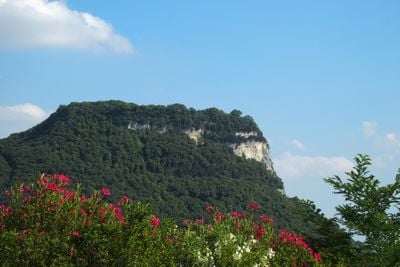
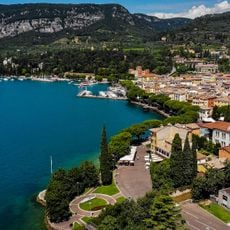
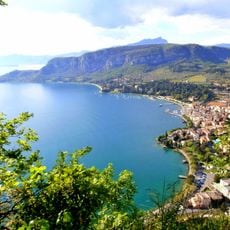
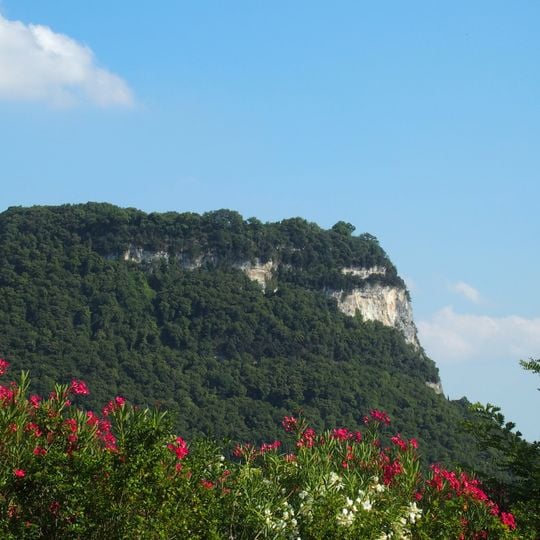
Rocca di Garda is a fortress ruin atop a 283-meter high hill that rises steeply above the landscape, creating a natural stronghold overlooking both lake and valley. The hilltop's flat area allowed enough space for defensive structures and a fortified settlement that could monitor approaching movement in all directions.
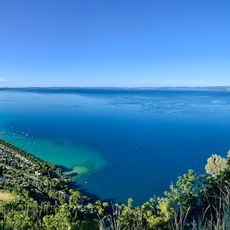
Germanic Lombards fortified the hilltop during the 5th century by constructing a defensive stronghold with thick walls that served as a regional power center. The location became so important that it eventually lent its name to the entire lake below.
The name Garda comes from the old Germanic "Warda" or "Warte", meaning guard or fortress, first recorded in a document of 712 AD from the reign of the Lombard king Liutprand. It named the castle, then the village, and finally replaced the Latin name Benaco for the whole lake. The Arab geographer Ibrāhīm al-Turtušī, travelling in Italy between 960 and 965, described the Rocca as imposing and heavily fortified.
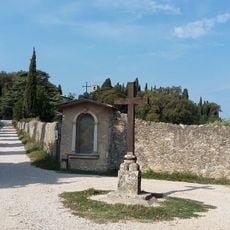
The hiking path climbs through meadows with minimal shade, so arriving early or bringing sun protection helps make the walk more comfortable. Sturdy footwear is important since the terrain can be uneven and edges present steep drops that require careful footing.
The 5th-century finds that date the castle's foundation include three coins — among them a gold tremissis of the Byzantine emperor Zeno — and a circular silver Gothic fibula with eagle heads. Lombard pottery from later layers shows the site stayed in use for centuries after.
The community of curious travelers
AroundUs brings together thousands of curated places, local tips, and hidden gems, enriched daily by 93,803 contributors worldwide.