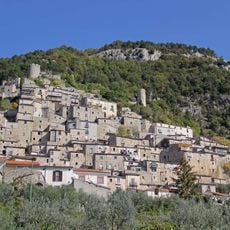
Castello D'Alessandro, Medieval castle in Pescolanciano, Italy.
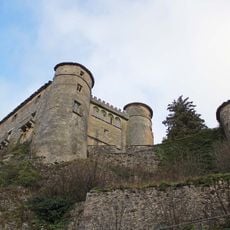
Castello D'Alessandro rises on a rocky spur overlooking the Molise landscape. The complex includes defensive walls, a courtyard, and residential rooms with a private chapel inside.
Certain records begin in the 13th century, when the feudal lord Ruggero di Peschio Lanciano received orders from Frederick II of Swabia and organized the expedition against Isernia from the fortress in 1224. After the 1456 earthquake the castle took in the people of Santa Maria dei Vignali. In 1654 the barony became a duchy under Fabio di Agapito, sixth baron, who began enlarging and consolidating the structure.
The chapel inside holds the relics of Saint Alexander of Bergamo, which arrived from Rome with papal approval in 1673. This religious treasure gave the site spiritual importance for those who lived nearby.
The castle stands on a rock spur above Pescolanciano, and the climb to it is on foot. Restoration and promotion began in 1996 through the Centro Studi d'Alessandro, set up by younger members of the family. The interior chapel, rebuilt after 1805, is small, so groups move through it in stages.
In 1943 the retreating Germans, following scorched-earth tactics, did not blow up the castle; it survived and in 1945 became the headquarters of the Anglo-American forces, who shared the residence with the D'Alessandro family. The German occupation had made it the headquarters of the Cassino front along the Gustav Line.
The community of curious travelers
AroundUs brings together thousands of curated places, local tips, and hidden gems, enriched daily by 93,390 contributors worldwide.