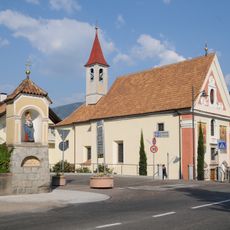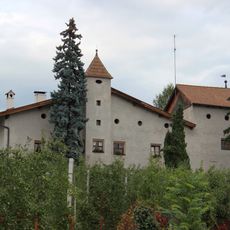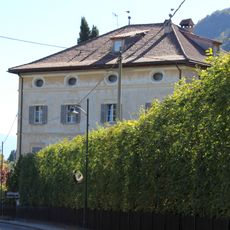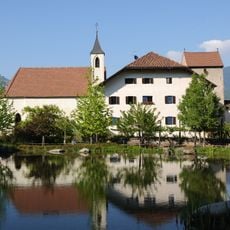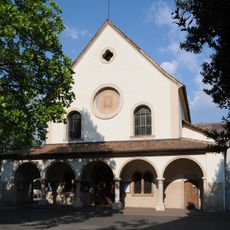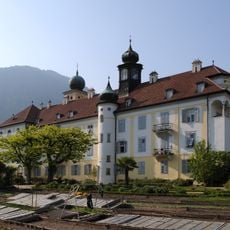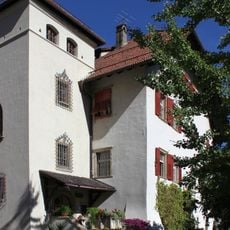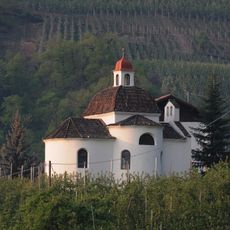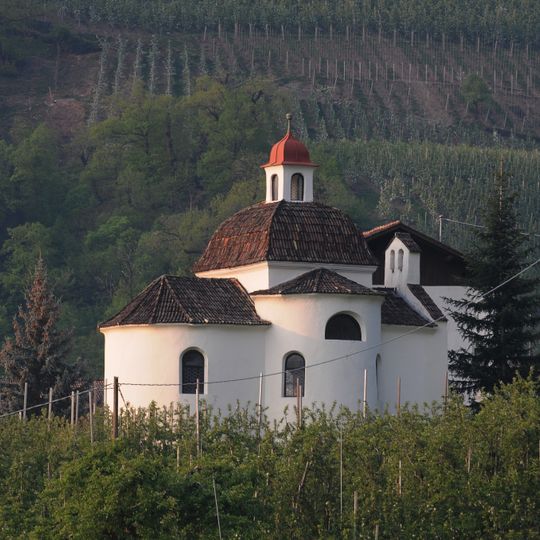
St. Magnus, Religious chapel in Gagers, Lana, Italy
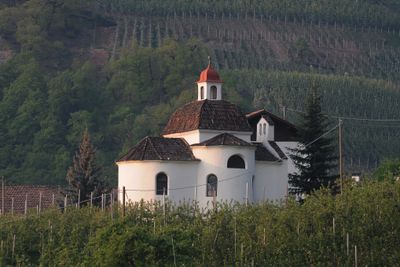
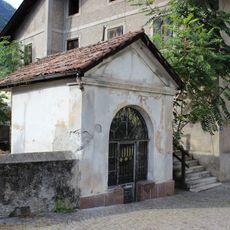
St. Magnus is a chapel built from 1725 to 1726 next to the Gagers manor in Lana, South Tyrol, following plans by Johann Georg Fischer of Füssen. It was modelled on the St. Mang collegiate church in Füssen. The high altar holds three figures carved in 1619 by Bartholomäus Steinle for that church, depicting Saints Magnus, Benedict and Scholastica, transferred here in 1725.
The chapel was built from 25 June 1725 on plans by Johann Georg Fischer of Füssen, following the model of the St. Mang collegiate church in Füssen, and was blessed by the administrator at Pentecost 1726. It was repaired in 1911 and thoroughly renovated in 1975. Since 3 August 1979 the Gagers farm ensemble, including the chapel, has been under monument protection.
The chapel's ceiling paintings from 1732 depict the miracles of Saint Magnus of Füssen, the patron whose staff was kept at Gagers. The high altar figures of Magnus, Benedict and Scholastica were carved in 1619 by Bartholomäus Steinle for the St. Mang monastery church in Füssen and came here in 1725 as surplus furnishings. The side altars and the altar top were made by the sculptor Thomas Seitz.
The chapel stands beside the Gagers farmstead near Schloss Braunsberg, a short way from Lana. It is a protected monument, so visits are usually limited to the exterior; the Baroque ceiling paintings of 1732 and the altarpiece figures are inside. The farm ensemble has been under monument protection since 3 August 1979.
The high altar figures of Magnus, Benedict and Scholastica were carved in 1619 by Bartholomäus Steinle for the monastery church of St. Mang in Füssen; the chapel received them in 1725 as surplus stock when that church was rebuilt. The ceiling paintings of 1732 show the miraculous powers of Magnus of Füssen.
The community of curious travelers
AroundUs brings together thousands of curated places, local tips, and hidden gems, enriched daily by 94,229 contributors worldwide.