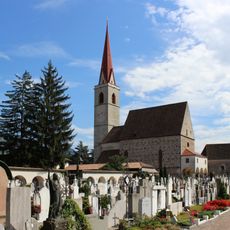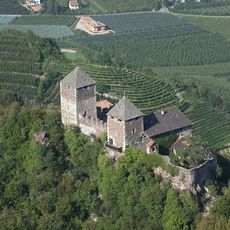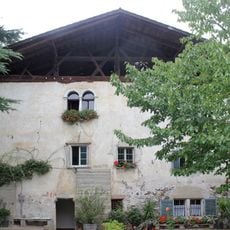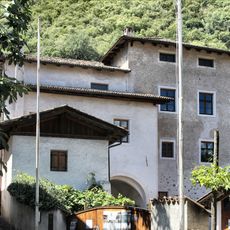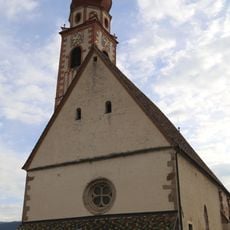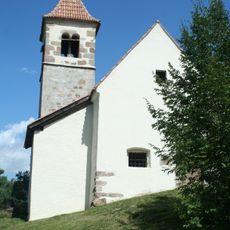
St. Hippolyt in Naraun, Romanesque church on a porphyry hill in Tisens, Italy.
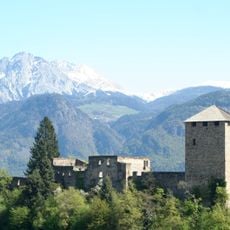
St. Hippolyt in Naraun is a Romanesque church built on a porphyry hill in the municipality of Tisens at about 750 meters elevation. The stone structure commands views from its hilltop location toward numerous villages and castles spread across the surrounding region.
The church was first recorded in 1288 and occupied a location with a long history of human use and settlement. Archaeological finds of stone tools at the site reveal that people visited and used this place for thousands of years before its church was built.
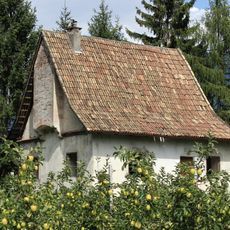
The church's nickname in local speech was "Kirchlein zum bösen Segen" (little church of the evil blessing), because the sexton rang its bells during storms. To avoid lightning strikes, the bell ropes ran into a neighbouring wooden hut. The patronal feast is celebrated on 13 August, the feast of Saint Hippolytus.
The hilltop is reached on foot; the church has no own priest and is a branch of the Tisens parish. The bell ropes were once led into a neighbouring wooden hut so that the sexton could ring during storms without risking a lightning strike. The site has been under South Tyrolean monument protection since 5 October 1981.
The hilltop was settled in the Neolithic, Bronze and Iron Ages, and cupstones and traces of Neolithic fire pits are still visible. A bell cast in 1556, the oldest in the parish of Tisens, hangs in the tower. Because the sexton rang it during storms, people called the church "Kirchlein zum bösen Segen".
The community of curious travelers
AroundUs brings together thousands of curated places, local tips, and hidden gems, enriched daily by 93,833 contributors worldwide.