Villa Friedenberg, Venetian villa in Chirignago, Italy.
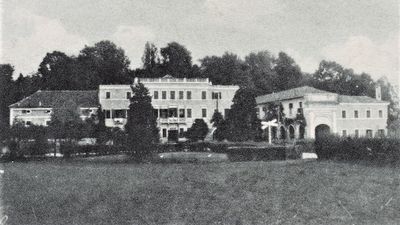
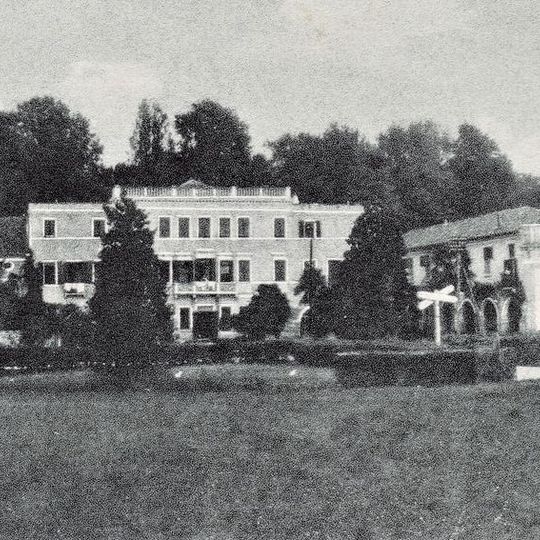
Villa Friedenberg stands at the corner of Via Asseggiano and Via Risorgimento in Asseggiano, north of Chirignago. The two-story main house, built in the 19th century, has a pale stucco facade with a flat roofline topped by a low balustrade and a small central pediment, rows of rectangular windows and a central entrance with a projecting balcony. A late-17th-century wing runs in line on the left, and a mid-19th-century wing stands perpendicular to it.
This villa was built in the 18th century and served as a temporary detention facility for Jewish deportees during World War II. It was used as a transit point before people were transported to concentration camps.
The Friedenberg family, of Hungarian Jewish origin, gave the villa its name; Vittorio Friedenberg was mayor of Chirignago in the early 1900s. During the war, Jews were crowded into a single room holding 30 to 50 people, then sent north the next day. After the war, residents learned their fate and found names written on the plaster walls.
The villa stands at the junction of Via Asseggiano and Via Risorgimento, north of Chirignago. It is in ruins and declared of particular historical and artistic interest by the Ministry for Cultural and Environmental Heritage (declaration no. 48755 of 10 November 1995). No recovery work appears to be under way, so view it from the street; the site is unsafe to enter.
The villa's name comes from the Friedenberg family, Hungarian Jews whose patriarch Vittorio was mayor of Chirignago in the early 1900s. During World War II, horse-drawn carts arrived in the evening carrying Jews who spent the night crowded 30 to 50 to a single room before being sent north. After the war, residents found their names written on the plaster walls.
The community of curious travelers
AroundUs brings together thousands of curated places, local tips, and hidden gems, enriched daily by 94,629 contributors worldwide.