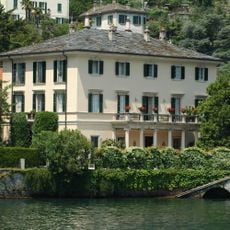
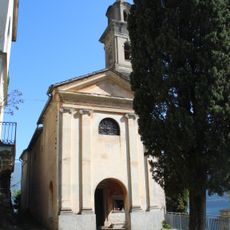
Orrido di Nesso, Natural canyon in Nesso, Italy.
Orrido di Nesso is a deep chasm formed where two mountain streams converge, creating a dramatic cascade between sheer limestone cliffs before emptying into Lake Como. The gorge is narrow and intense, with steep rock walls that funnel the water downward in a powerful natural display.
This chasm was carved by water erosion over thousands of years, long before people arrived in the region. By the Middle Ages, locals had discovered the power of the waterfall and used it to operate mills and workshops.
The gorge is named after the Nesso torrent, whose waters join the Tuf to form the falls. From the 14th century the water powered mills, paper mills, spinning mills, oil presses, hammers and presses, and two silk factories. The site appears in Leonardo da Vinci's Codex Atlanticus and in Gianbattista Bazzoni's novel Falco della Rupe.
The best views of the chasm come from Piazza Castello or the Civera Bridge, where you can watch the water's power from up close. If you want to go deeper, there are stairs that descend toward the lake, though sturdy shoes are essential because the rocks are wet and slippery.
The gorge is named in Leonardo da Vinci's Codex Atlanticus, and in the 18th and 19th centuries Federico and Carolina Lose painted it in aquatints. Gianbattista Bazzoni set scenes of his novel Falco della Rupe o la Guerra di Musso here. Locals also remember the ravine as a hiding place used by smugglers.
The community of curious travelers
AroundUs brings together thousands of curated places, local tips, and hidden gems, enriched daily by 94,680 contributors worldwide.