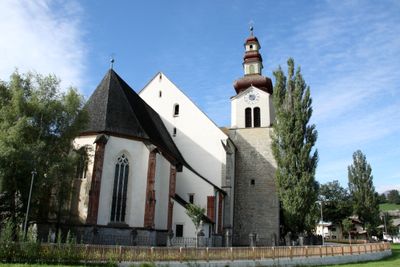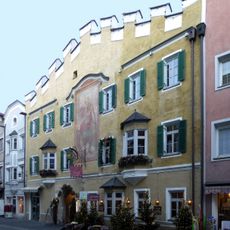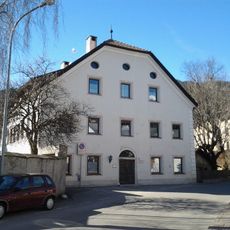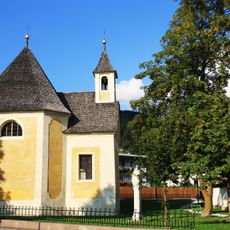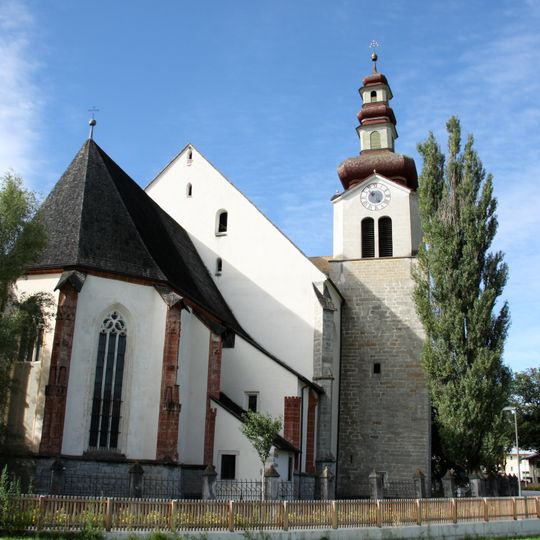
Our Lady, Gothic church in Sterzing, Italy
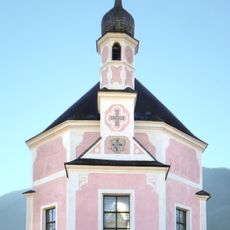
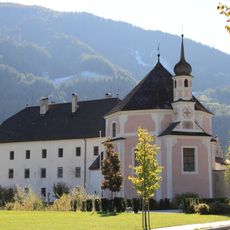
Our Lady (Nostra Signora della Palude, Unsere Liebe Frau im Moos) is the parish church of Sterzing, built between 1417 and 1525 on the site of a Romanesque place of worship recorded in 1233. It stands slightly south of the town centre, oriented southwest, with a nave 38 metres long and a height of 32 metres. The interior has three naves with large white marble columns, vault frescoes by Adam Mölk and, on the north wall, a Roman funerary slab of Postumia Victorina from the 2nd or 3rd century.
A Romanesque place of worship on this site was recorded in 1233. The present church was built between 1417 and 1525, repeatedly enlarged in Gothic style, and from the start ranked among the largest churches in Tyrol, 32 metres high with a 38-metre nave. In 1497 the foundation stone of the hall was laid in the presence of Emperor Maximilian I of Habsburg, as an inscription on the south portal records. Baroque forms followed in the 18th century, and around the mid-19th century the presbytery, including the high altar, was restored.
The German name "Unsere Liebe Frau im Moos" and the Italian "della Palude" both refer to the marshy ground of this southern edge of Vipiteno, where the church stands beside the cemetery. The building appears in several shots of Anne Riitta Ciccone's 2017 film "I'm - Infinita come lo spazio", filmed at sites in Trentino-Alto Adige including the nearby German-language Josef Rampold primary school.
The church stands slightly off-centre in the southern part of Vipiteno, next to the cemetery, and is oriented towards the south-west. The decorated portal on the southern flank, attributed to Mattheis Stöberl, carries an inscription recalling the laying of the first stone in 1497 in the presence of Emperor Maximilian I. Inside, look for the Roman funerary stone of Postumia Victorina on the northern wall.
A Roman-era funerary slab to Postumia Victorina, dating from the 2nd or 3rd century, was found during construction and is set into the northern wall of the nave. The south portal is attributed to Mattheis Stöberl, and an inscription records the laying of the first stone in 1497 in the presence of Emperor Maximilian I.
The community of curious travelers
AroundUs brings together thousands of curated places, local tips, and hidden gems, enriched daily by 93,515 contributors worldwide.