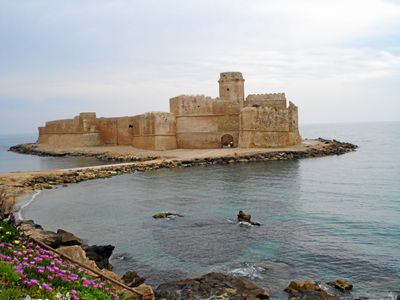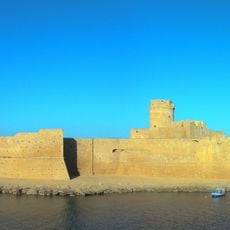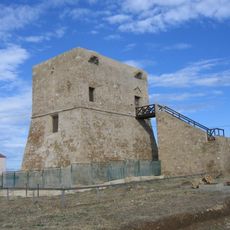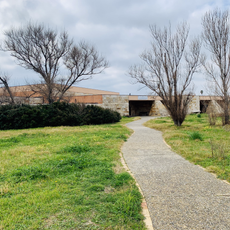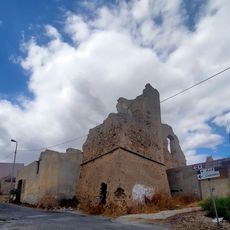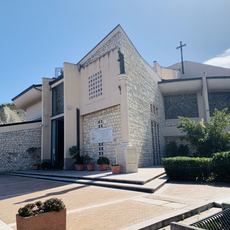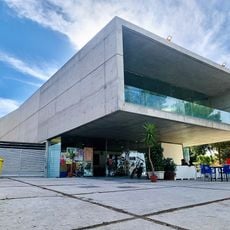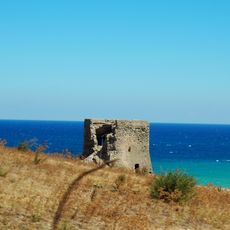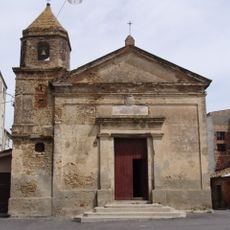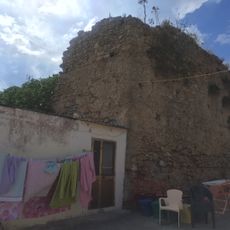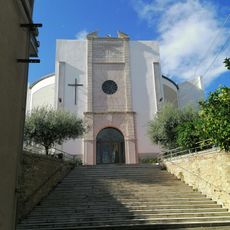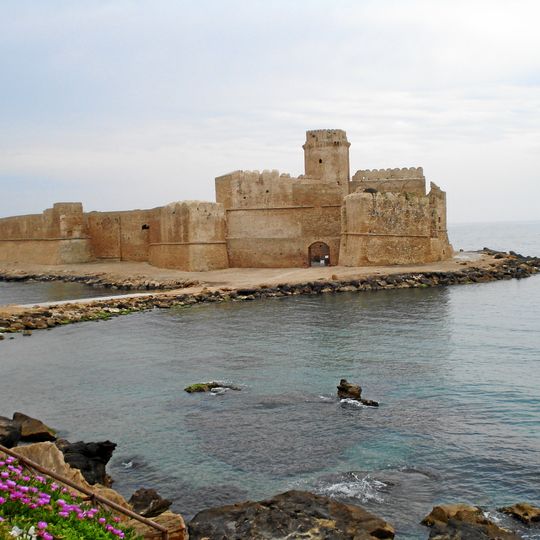
Castello Aragonese, Coastal fortress in Le Castella, Italy.
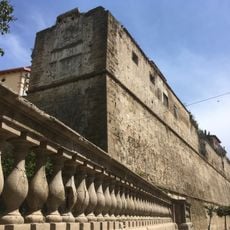
The Fortezza di Le Castella, also called Castello Aragonese, is a fortress ruin on a small peninsula jutting into the sea at Le Castella, a frazione of Isola di Capo Rizzuto. It stands on Via San Marco and consists of an outer wall with a keep, military structures, and traces of a civilian settlement inside. Its origins are probably from Magna Graecia.
The fortress foundations date back to 400 BC during Greek colonization, with later modifications by Normans, Byzantines, Angevins, and Aragonese rulers across several centuries. Each ruling power left architectural marks that trace the transformation from antiquity to the modern era.
The fortress was never a noble residence but a military stronghold that also housed a civilian settlement; records show people lived inside its walls from at least the second half of the 17th century to the early 18th, while the headland outside was farmed and grazed. A castle proper, seat of a fief's lords, stood inland and appears on the coat of arms of the University of Le Castella. In 2015 the fortress opened its gates for wedding ceremonies.
The fortress is reached on foot along Via San Marco, on the small peninsula of Le Castella. The different sections were built in different eras, so surfaces and steps vary; sturdy shoes help on the uneven passages. The site is managed as a museum by the Direzione Regionale Musei del MiC.
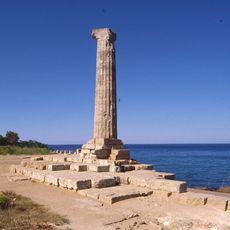
A storm in the 1970s exposed a 40-metre wall beneath the fortress foundations on the east flank. Its limestone blocks and small square stones laid in a checkerboard pattern closely resemble a Hellenistic wall at Velia, dated between the second half of the 4th century BC and the 3rd century BC. It may be an ancient breakwater or the remains of a Krotonian phrourion, a military outpost and natural stopover for ships.
The community of curious travelers
AroundUs brings together thousands of curated places, local tips, and hidden gems, enriched daily by 94,132 contributors worldwide.