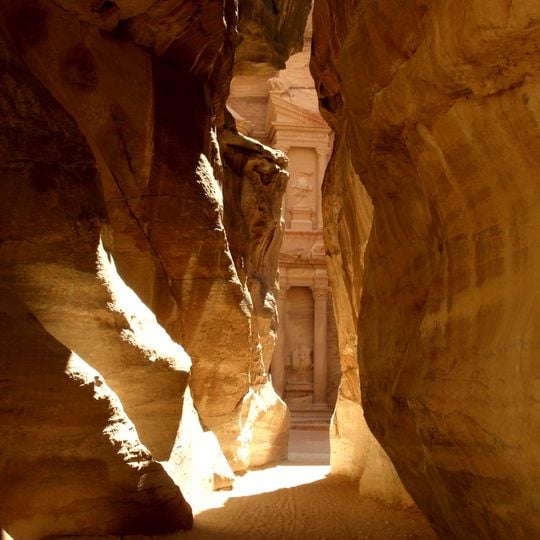
Siq, Natural canyon entrance in Petra, Jordan
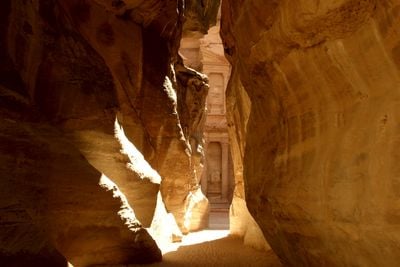
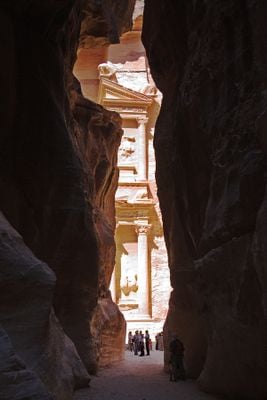
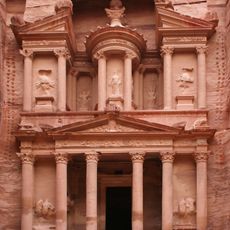
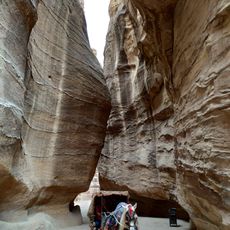
The Siq is a natural geological fault split by tectonic forces, not carved by water, forming a gorge 1.2 km long and in places no more than 3 metres wide, with walls 91 to 182 metres high. It ends at Al-Khazneh (the Treasury), whose pale-pink carved facade with a triangular pediment and columns stands at the canyon floor.
The Siq is a natural geological fault split apart by tectonic forces, not carved by erosion; water only later smoothed its walls. The Nabataeans used it as the grand caravan entrance to Petra and controlled Wadi Musa with a dam at its mouth between the 1st century BC and the early 1st century AD. A monumental arch there collapsed in an 1896 earthquake, and the dam was reconstructed in 1963 and 1991.
The name al-Siq means "the Shaft". Votive niches holding baetyli line both walls, indicating the gorge was sacred to the Nabataeans. In 1998, road-lowering work uncovered near life-size statues of two merchants, each leading two camels, now eroded at the top.
Walking through the canyon takes about half an hour and can be taxing in midday heat with little shelter available. Bring sturdy footwear and plenty of water to stay comfortable during the walk.
The Siq is a natural tectonic fault, not a water-cut slot canyon; water only smoothed it later. Its walls rise 91 to 182 metres. In 1998, lowering the road by more than six feet uncovered near life-size statues of two merchants, each leading two camels, now eroded at the top.
The community of curious travelers
AroundUs brings together thousands of curated places, local tips, and hidden gems, enriched daily by 93,108 contributors worldwide.