Yoshimine-dera Temple, Buddhist temple in Nishikyo-ku, Kyoto, Japan
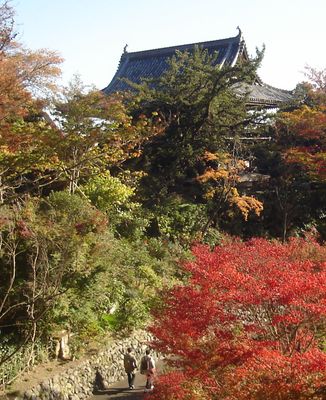
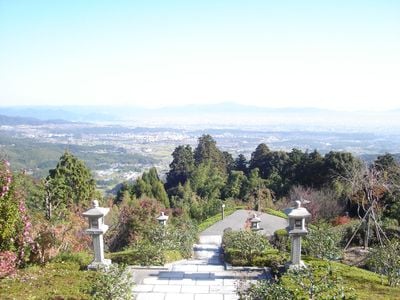
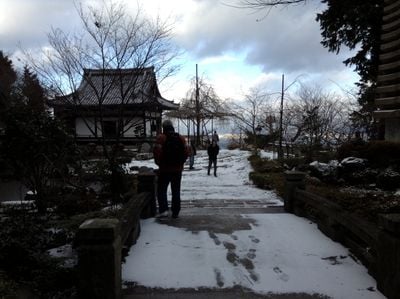
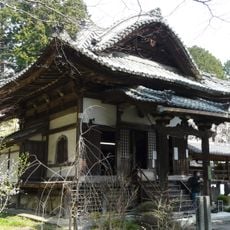
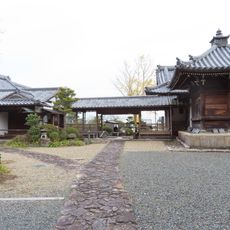
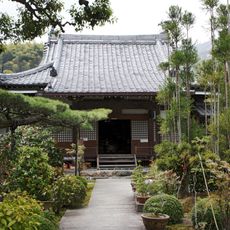
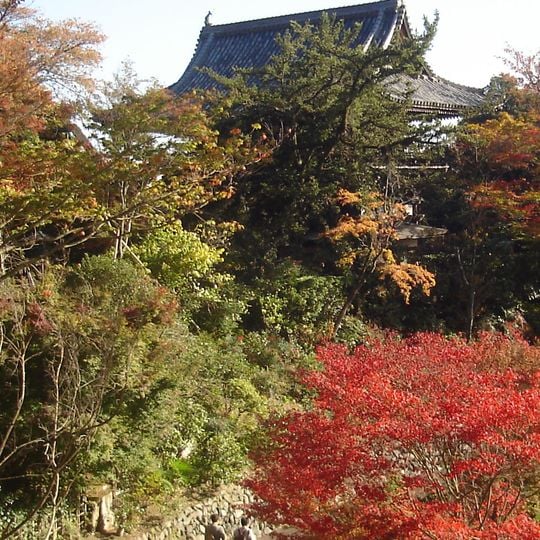
Yoshimine-dera is a Buddhist temple in Nishikyō Ward spreading across a forested mountainside. Several prayer halls and pavilions stand along curved paths that wind through gardens with maple, cherry trees, and flowers.
A Buddhist monk founded this complex in 1029, and five years later it received imperial recognition. Over the centuries it became an important station on the western pilgrimage route dedicated to Kannon worship.
The temple's name was changed to Yoshimine-dera in 1192, when Emperor Go-Toba granted a plaque bearing those characters; it had previously been called Ryōhō-ji. It is the 20th stop on the Saigoku Kannon Pilgrimage, and pilgrims pray before the hibutsu Jūichimen Kannon in the main hall. The grounds also hold the graves of imperial princes from Shōren-in, which earned the temple the name Nishiyama Monzeki.
The bus from Hankyu Higashi-Muko Station ends at the foot of the mountain; from there the temple gate is a 3.4 km uphill walk of about 45 minutes. A paid car park sits a few minutes below the gate, and the grounds then climb by stone steps from the main hall at about 305 m to the Yakushi Hall at the top.
The Yōryū no Matsu, a five-needle pine over 600 years old, was named "Gliding Dragon" in 1857 by the former Minister of the Right, Kazan'in Ieatsu. It was once more than 50 meters long, but pine beetles forced the cutting of about 10 meters in 1994; it was designated a Natural Monument in 1932. A stone marker inscribed in 1893 by Lieutenant General Toriō Koyata stands beside it.
The community of curious travelers
AroundUs brings together thousands of curated places, local tips, and hidden gems, enriched daily by 93,120 contributors worldwide.