Lake Tazawa, Caldera lake in Semboku, Akita Prefecture, Japan
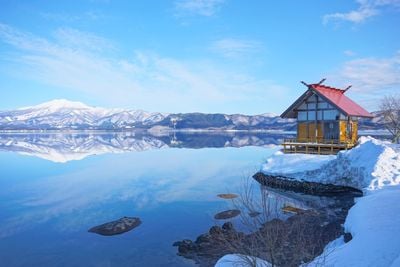
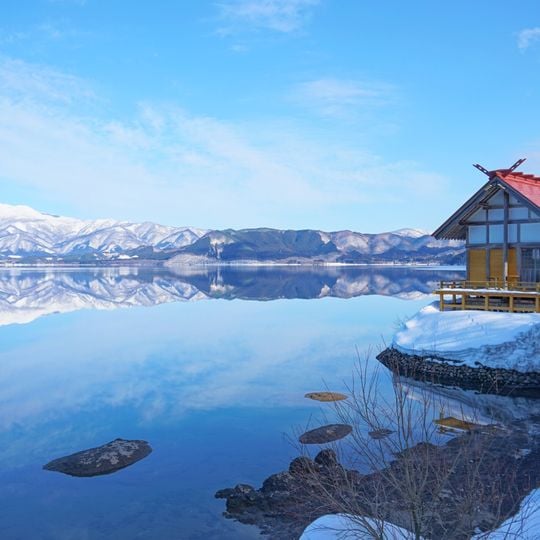
Lake Tazawa is a crater lake in Semboku that covers 25.9 square kilometers in northern Akita Prefecture. Sapphire-blue water reflects the surrounding mountain forests, creating a natural frame of wooded hills along the shoreline.
Lake Tazawa was long known as Tazawa-no-kata or Tatsuko-ga-kata before the name Tazawa-ko took hold in the Meiji period. In 1940 a channel diverted strongly acidic water from the Tamagawa River into the lake for hydropower and irrigation, killing most fish, including the endemic kunimasu. Liming began in 1972 and a neutralization plant opened in 1991.
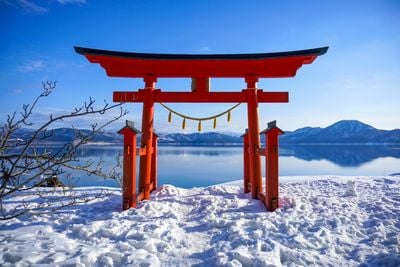
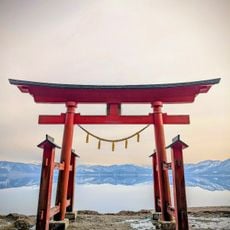
The lake's name was fixed only in the Meiji period; older records call it Tazawa-no-kata or Tatsuko-kata, and one explanation traces "Tazawa" to the Ainu tapukopu, "hill with a raised circular top". Four statues of the maiden Tatsuko stand around the shore, among them Yasutake Funakoshi's bronze Tatsuko, unveiled on 12 May 1968, and a Tatsuko-hime figure in the Goza-no-ishi Shrine grounds on the north bank.
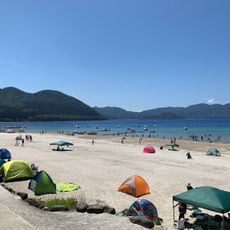
Buses from JR Tazawako Station bring visitors to several access points along the 20-kilometer shoreline. The paths around the shore are suitable for walking, and in summer you can swim or rent pedal boats.
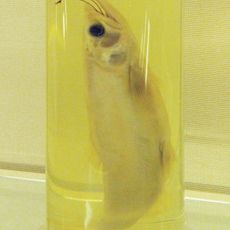
The kunimasu, a fish found only in Lake Tazawa, was declared extinct after the 1940 inflow of acidic Tamagawa water. In 2010 a population was confirmed in Lake Saiko, Yamanashi Prefecture, where eggs had been stocked, and the two lakes became sister lakes in November 2011. A lakeside museum opened on 1 July 2017 to display kunimasu borrowed from Yamanashi.
The community of curious travelers
AroundUs brings together thousands of curated places, local tips, and hidden gems, enriched daily by 92,624 contributors worldwide.