Heian-kyō, Planned capital in Kadono and Otagi districts, Japan
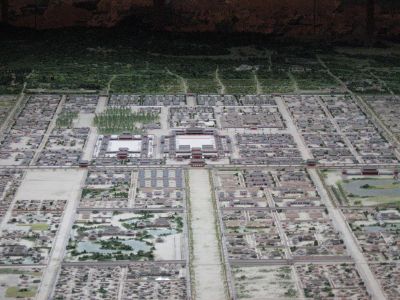
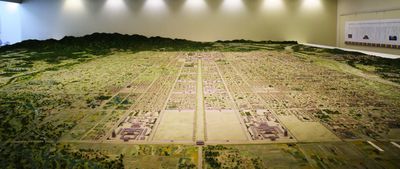
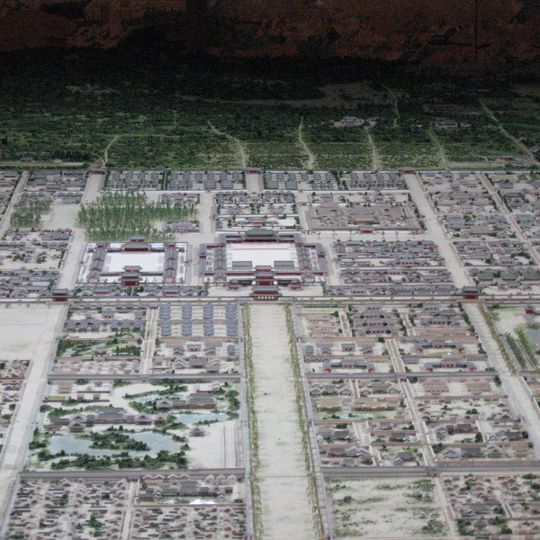
Heian-kyō was the planned capital built in the Kadono and Otagi districts following a grid layout modeled on Chinese cities that shaped what would become modern Kyoto. The site extended 5.2 kilometers from north to south and 4.5 kilometers from east to west with the imperial palace positioned at the northern edge.
Emperor Kanmu founded the city in 794 after moving from Nagaoka-kyō and launched what became a new era lasting more than a thousand years. The eastern half developed more rapidly than the western side, which remained largely unbuilt and later turned into farmland.
The name translates to "capital of peace and tranquility," expressing a wish for lasting harmony in the new seat of power. Residents followed strict rules about where they could build based on their rank in society.
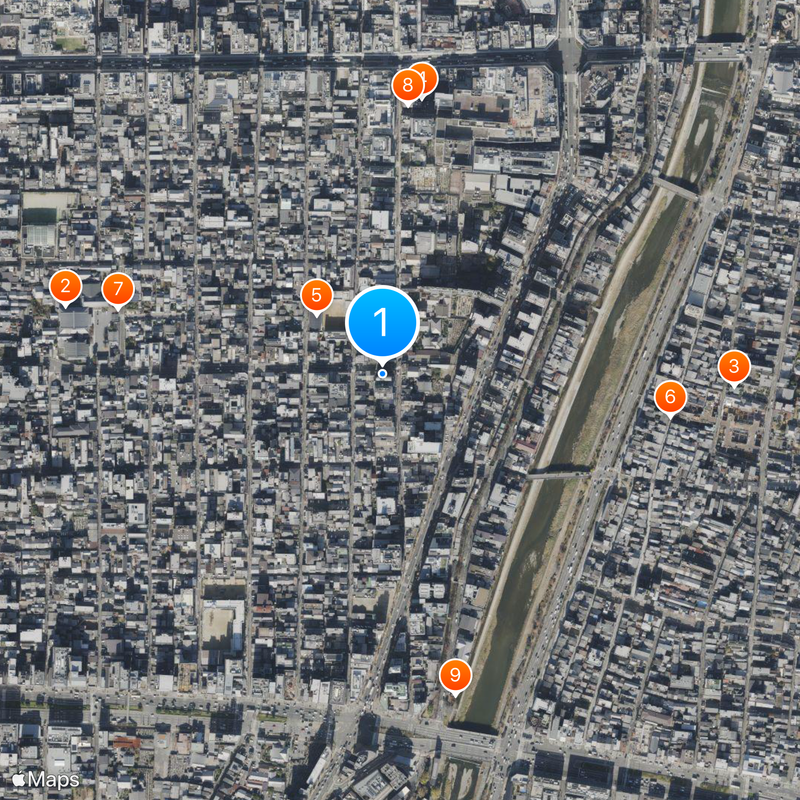
The two large markets in the eastern and western sections served as distribution centers for goods across the different city quarters. Visitors can still trace the original street grid in parts of modern Kyoto, especially in the center around the former palace grounds.
The city relied on its surrounding terrain and principles drawn from geomancy rather than building defensive walls despite its role as the capital. Each plot followed a fixed system with parcels measuring 30 by 15 meters, which allowed for an even distribution of land.
The community of curious travelers
AroundUs brings together thousands of curated places, local tips, and hidden gems, enriched daily by 91,392 contributors worldwide.