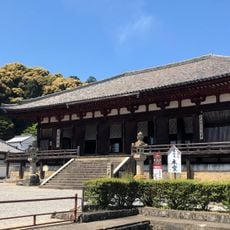
Taima-dera Temple, Buddhist temple in Katsuragi, Nara Prefecture, Japan.
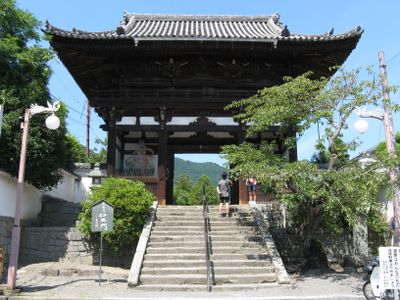
Taima-dera is a Buddhist temple in Katsuragi, Nara Prefecture, consisting of three main buildings: the Mandala Hall, the Kondō Hall, and the Kōdō Hall. Inside each of these spaces stand ancient Buddha figures made of wood, clay, and bronze that show different periods of Japanese sculpture.
According to the Kenkyū Pilgrimage Record of 1191, Prince Maroko founded the temple and his grandson Taima no Kunimi relocated it in 680. Other records give 681, 685 or 687 for the move. The east and west pagodas survive from the Nara period, and the Mandala Hall was built in 1161 reusing Nara-period timbers.
The name connects with Princess Chūjō, who according to tradition wove a mandala here in the eighth century that is now kept behind closed doors at night. Monks and pilgrims come regularly to pray before this textile image depicting the Pure Land.
The compound lies roughly one kilometer west of Taimadera Station on the Kintetsu Line and can be reached on foot in a few minutes. The path leads through a small village that is especially quiet in the morning and early afternoon.
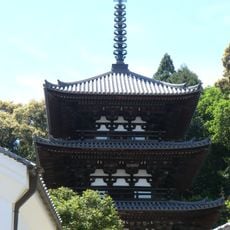
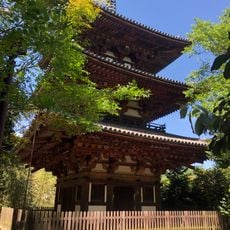
The temple keeps its original twin pagodas, East and West, built between the Nara period and the early Heian period; it is the only Japanese temple where both pre-modern towers survive. The pair is also the only complete set of twin pagodas from the Nara period still standing.
The community of curious travelers
AroundUs brings together thousands of curated places, local tips, and hidden gems, enriched daily by 93,193 contributors worldwide.