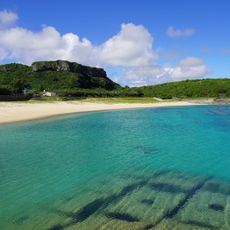
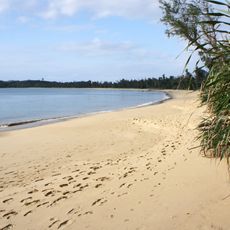
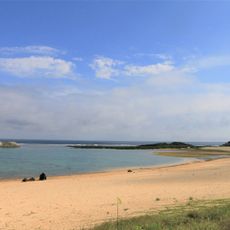
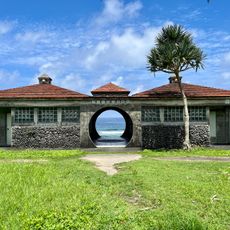
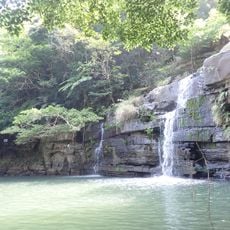
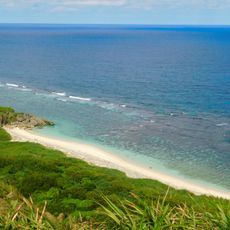
Yonaguni Monument, Underwater rock formation near Yonaguni Island, Japan.
The Yonaguni Monument is a sandstone formation resting on the seabed off the coast of Yonaguni and extending across several levels. The structure shows surfaces that look like steps and shapes that resemble artificial working.
Kihachiro Aratake found the formation in 1986 while searching for hammerhead sharks in the waters of the Ryukyu Islands. The finding triggered a debate that continues today among archaeologists and geologists about the origin of the structures.
Divers call the site "Iseki Point" (ruins point), the name given by the local diver who found the stepped structure in 1986. The island's own name for the cliff above it is Arakawabana, or Araga-bana in the Yonaguni language. Freediver Jacques Mayol wrote a book about his dives here.
Divers reach the site at around 85 feet (26 meters) deep, where visibility changes with season and current. Water temperature stays between 68 and 82 degrees Fahrenheit (20 and 28 degrees Celsius) year-round, so a wetsuit is recommended.
The formation lies below Arakawabana cliff, the southern tip of Yonaguni, and its main face points south-southeast. Geologist Robert Schoch notes the rocks are swept by strong currents, which helps explain the absence of loose blocks on the flat areas.
The community of curious travelers
AroundUs brings together thousands of curated places, local tips, and hidden gems, enriched daily by 92,519 contributors worldwide.