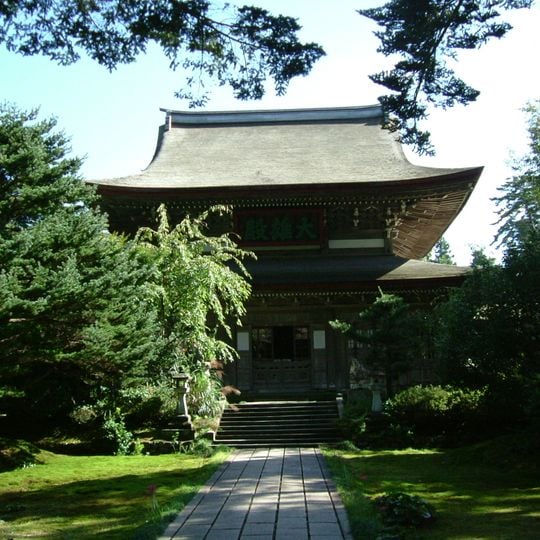
Daijō-ji Temple, Buddhist temple in Nagasakamachi, Japan.
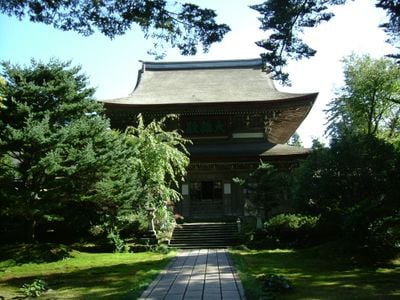
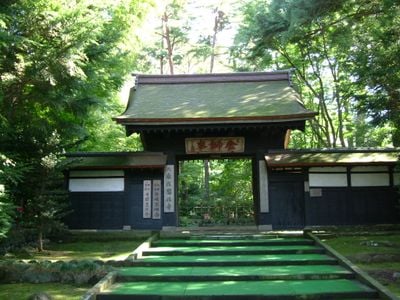
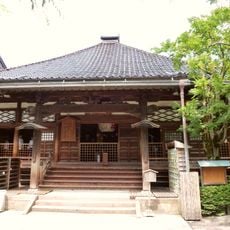
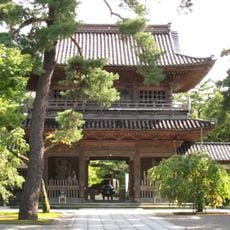
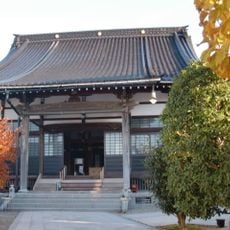
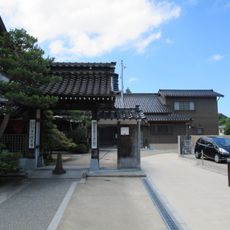
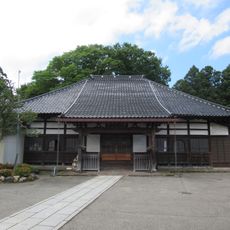
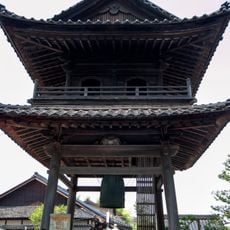
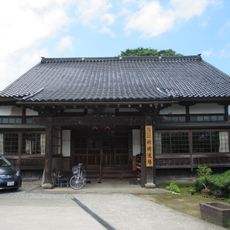
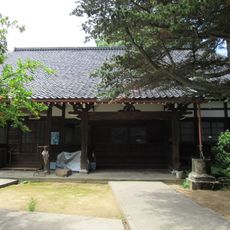
Daijō-ji is a Sōtō Zen monastery on the wooded hills of southern Kanazawa, near the top of Mount Nodayama. Its precinct holds a black main gate built in 1665, an early Edo-period mountain gate, a Buddha hall of 1702, and a lecture hall from around 1697. The Buddha hall is a National Important Cultural Property; the gates and halls are city- or prefecture-designated cultural properties.
Founded in 1263 at Nonoichi by Togashi Iegisa, who installed the Shingon priest Chōkai; in 1283 Tettsū Gikai was invited and turned it into a Sōtō Zen monastery, though 1289 and 1291 are also given as founding years. Keizan Jōkin, its second abbot, wrote the Denkōroku here. Burned in the late Muromachi wars, it moved to Kanazawa under the Honda family and reached its present site in 1697.
Daijō-ji is known as "Okyo-dera" for the 165 sliding-door and hanging-scroll paintings that Maruyama Okyo and his pupils made there over five visits, repaying the abbot Mitsuzo's patronage; they decorate 13 rooms around an eleven-faced Kannon statue. Open meditation is held on Sundays, and short stays let visitors share the monks' life.
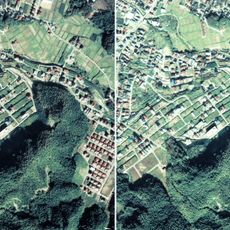
The temple lies in Nagasaka-machi, south of Kanazawa near the top of Nodayama; the cemetery of Maeda Toshiie is next to it. From Kanazawa Station take the Hokutetsu bus 26 to Nagasakadai, then walk about 10 minutes; from Korinbo, buses 26 or 81 stop at the same place. Open meditation is held on Sundays, and short stays sharing the monks' life are possible.
The temple is nicknamed "Okyo-dera" for the 165 sliding-door and hanging-scroll paintings that Maruyama Okyo and his pupils made there over five visits, repaying the abbot Mitsuzo's early patronage. They decorate 13 rooms around an eleven-faced Kannon statue and are designated Important Cultural Properties.
The community of curious travelers
AroundUs brings together thousands of curated places, local tips, and hidden gems, enriched daily by 93,172 contributors worldwide.