Tōkei-ji Temple, Buddhist nunnery in Kamakura, Japan
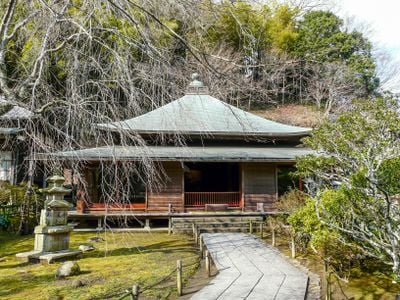
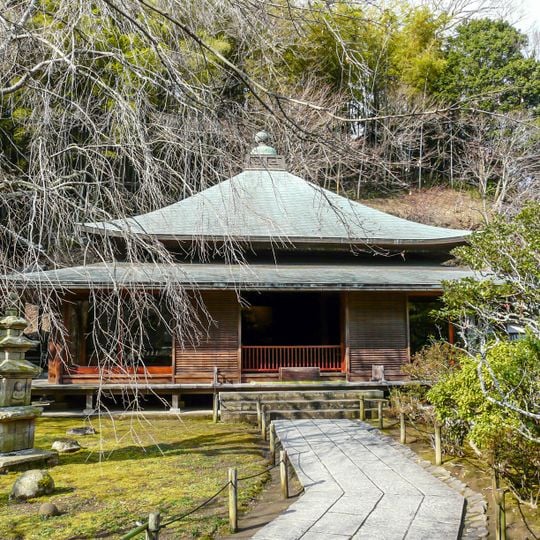
Tōkei-ji is a Rinzai Zen temple in Kamakura, founded in 1285 as a nunnery. Its single-story wooden hall has a broad, low-pitched hip roof of grey-green shingles with a small ridge ornament, deep eaves, and a dark veranda behind a low red railing. A closed section with horizontal slats and a pale panel stands to the left, and a stone-paved path crosses grass to the low stone foundation.
Kakusan-ni, widow of Hōjō Tokimune, founded this nunnery in 1285 as a refuge for women seeking divorce. Staying within the walls for three years granted them legal separation, which remained the sole option for women until laws changed in 1873.
The cemetery holds graves of thinkers like Kitarō Nishida and Daisetz Teitaro Suzuki, who shaped Japanese philosophy and brought Zen studies to Western audiences. Their resting places still draw visitors interested in Japanese intellectual life.
Photography, including with smartphones, has been banned on the temple grounds since 7 June 2022. The Suigetsu-dō hall is not open to visitors. The temple stands in Yamanouchi, Kamakura, a short walk from Kita-Kamakura station on the JR Yokosuka Line.
For over six centuries, this nunnery offered the only legally recognized path to divorce for women in feudal Japan. That role ended only with the modernization of family law in the late 19th century.
The community of curious travelers
AroundUs brings together thousands of curated places, local tips, and hidden gems, enriched daily by 93,243 contributors worldwide.