Tō-ji Temple, Buddhist temple in Minami-ku, Kyoto, Japan.
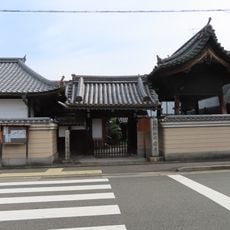
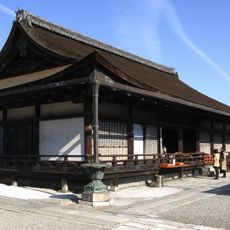
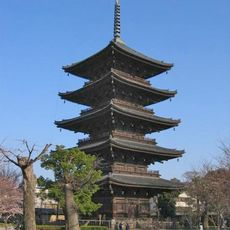
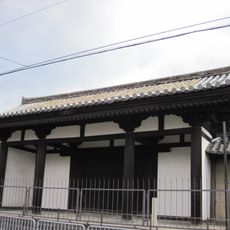
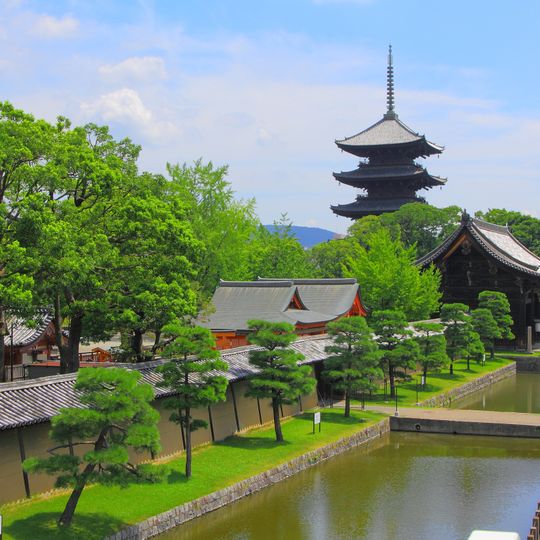
Tō-ji is a Shingon Buddhist temple in Minami-ku, southern Kyōto. Its five-story pagoda, rebuilt in 1643, rises 54.8 meters and is Japan's tallest wooden tower. A stone-edged pond and a long hall with a red veranda sit among the trees, and the South Gate has white lanterns inscribed "東寺".
Emperor Kanmu founded the temple in 796 as one of three permitted Buddhist sites in the new capital. Kōbō Daishi took control about 30 years later and transformed it into the center of the Shingon school of Buddhism.
The name Tō-ji, "East Temple", dates from the founding and was used in official records; the registered name Kyō-ō-gokoku-ji first appears in a document of 1240. On the 21st of each month, the anniversary of Kūkai's death, a flea market called Kōbō-san fills the grounds with antiques, pottery and food; the December market is the largest.
The compound opens daily in the morning and closes in late afternoon with admission required for main areas. The pagoda opens only during certain seasons while most outdoor spaces remain freely accessible.
The five-story pagoda, rebuilt in 1643 by order of Tokugawa Iemitsu, stands 54.8 meters tall and is Japan's tallest wooden tower. It is usually closed, but on special occasions visitors can see the interior with relics, sculptures, and paintings, plus four Buddha statues at ground level facing different directions.
The community of curious travelers
AroundUs brings together thousands of curated places, local tips, and hidden gems, enriched daily by 92,168 contributors worldwide.