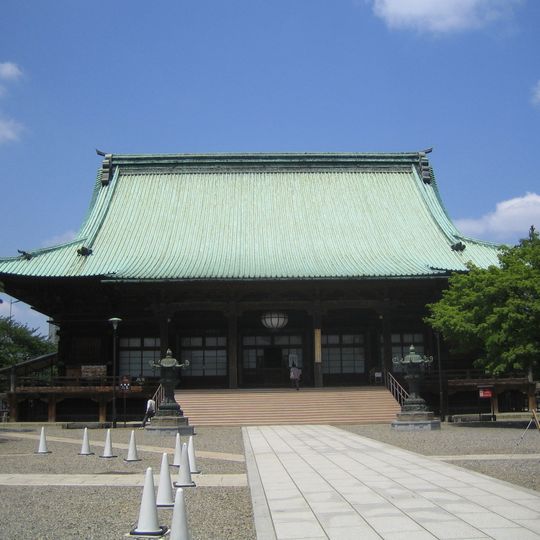
Gokoku-ji Temple, Buddhist temple in Bunkyo, Japan
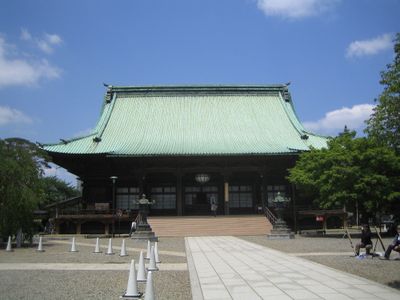
Gokoku-ji is a Shingon Buddhist temple in Ōtsuka, Bunkyo, whose main hall (Kannon-Do) dates from 1697 and is an Important Cultural Property. The hall has a broad pale-green ribbed roof with flared eaves, a dark wooden facade with a central entrance and lattice panels, and a stone stairway with a central handrail leading up from a paved courtyard.
Gokoku-ji was founded on February 7, 1681, when shogun Tokugawa Tsunayoshi, at his mother Keishōin's wish, granted land to the priest Ryōken and ordered him to build her prayer temple. The main hall dates from 1697. After the Meiji Restoration the temple lost shogunal patronage, and in 1873 part of its grounds became the Toshimaoka imperial cemetery.
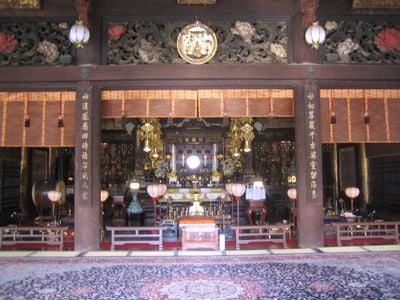
The main hall preserves works of art from the Genroku period, showcasing traditional Buddhist craftsmanship and religious expression in Japan. Visitors can view these pieces within their original liturgical setting, where they continue to serve ceremonial purposes today.
The temple sits in Ōtsuka, central Tokyo, and welcomes visitors during regular opening hours. Detailed information about ceremonies and events is available on the official website.
The Shoro-Do belfry displays Irimoya architecture and houses a bell cast in 1682, making it one of the oldest preserved in Tokyo. This combination of construction style and historic bell makes the structure a noteworthy element of the temple grounds.
The community of curious travelers
AroundUs brings together thousands of curated places, local tips, and hidden gems, enriched daily by 93,359 contributors worldwide.