Gokuraku-ji Temple, Buddhist temple in Kamakura, Japan
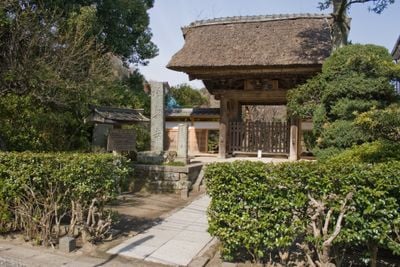
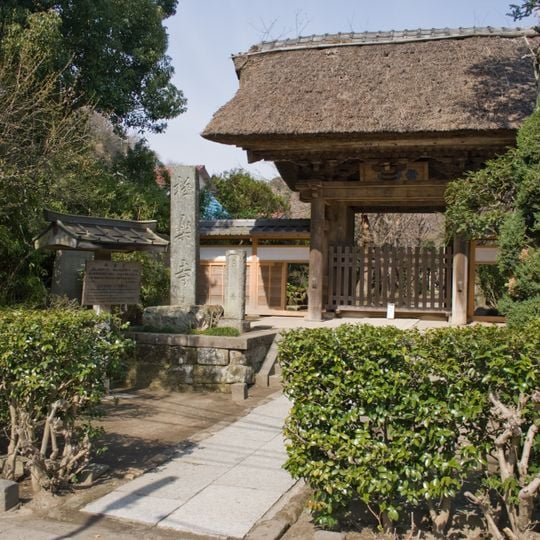
Gokuraku-ji is a Shingon Ritsu temple in western Kamakura. A short stone-edged path leads to a thatched gate built in 1863, with a dark wooden frame and a slatted fence closing the opening; a tall stone pillar with carved characters stands to its left. Beyond the gate are the main hall, Daishi Hall, and a treasure hall.
The temple was moved to its present site in 1259 by Hōjō Shigetoki, who had retired from the regency and taken Buddhist vows. The monk Ninshō became its de facto founder on entering in 1267, and the temple burned in 1275 but was rebuilt by Ninshō. At its height it had seven main halls and 49 sub-temples; the mountain gate standing today dates from 1863, the rest being modern reconstructions after the 1923 earthquake.
The name Gokuraku-ji refers to the Western Paradise of Amida Buddha, yet the temple belongs to the Shingon Ritsu school, not the Pure Land tradition. Its mountain gate is thatched in straw, and the approach is lined with cherry trees; the temple is the first stop on the Tokoku Flower Temple pilgrimage, dedicated to cherry blossoms. The main hall is normally closed, opening only from 7 to 9 April.
Gokuraku-ji is a 2- to 3-minute walk from Gokurakuji Station on the Enoshima Electric Railway, and there is no parking lot. Grounds are open from 9:00 to 16:30 with no admission fee. The main hall is normally closed and opens only from April 7 to 9; the Ninshō Tower is shown on April 8 alone. Photography is not allowed on the grounds.
A stone mortar from medieval times still stands on the grounds and reminds visitors that medicinal remedies were once prepared here. Several wooden sculptures inside carry designation as important cultural properties of the country.
The community of curious travelers
AroundUs brings together thousands of curated places, local tips, and hidden gems, enriched daily by 93,323 contributors worldwide.