Goshikizuka kofun, Ancient burial mound in Tarumi-ku, Japan
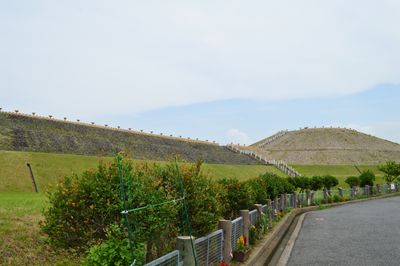
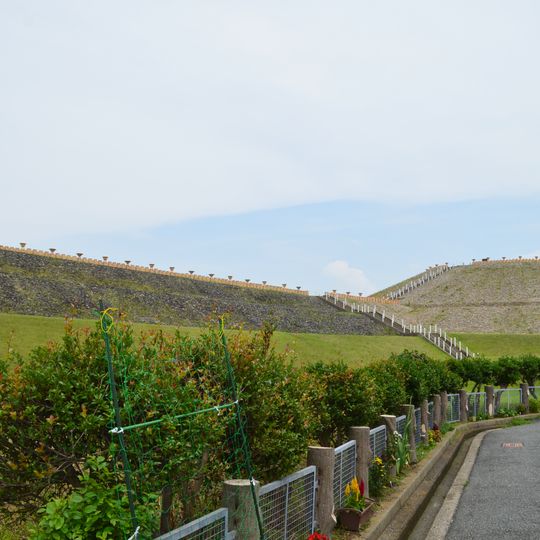
Goshikizuka Kofun is a large burial mound shaped like a keyhole, with a square front section and a round rear section. The mound spans 194 meters in length and stands 18 meters high, built to serve as a tomb for important figures of ancient Japan.
Built around the late 4th to early 5th century, the mound is Hyogo Prefecture's largest kofun at 194 m. In 1921 it was designated a national historic site together with the adjacent Kotsubo Kofun. Excavation and restoration from 1965 to 1974 made it the first kofun in Japan to be restored to its original appearance.
The name Sentsubo, "thousand pots", comes from the rows of haniwa on the mound; Goshikizuka, "five-colour mound", may refer to stones from the Akashi Strait that glint in changing light. The mound was long called the tomb of Emperor Chūai, and in the Edo period Shiba Kōkan recorded that name in his diary.
Visitors can walk around and explore the mound from various points to see its distinctive keyhole shape. Comfortable walking shoes are helpful since the terrain has some slopes and pathways wind through the site.
The mound's stone facing is estimated at 2,233,500 stones weighing 2,784 tons; the upper tiers used granite-like stone from Awaji Island, matching a Nihon Shoki account of stones carried from Awaji to build a tomb at Akashi. A child's magatama bead was found at the west constriction.
The community of curious travelers
AroundUs brings together thousands of curated places, local tips, and hidden gems, enriched daily by 93,603 contributors worldwide.