Hannya-ji Temple, Buddhist temple in Nara, Japan.
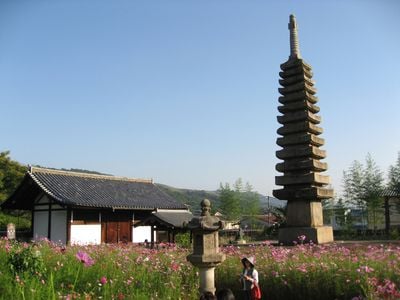
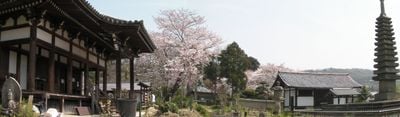
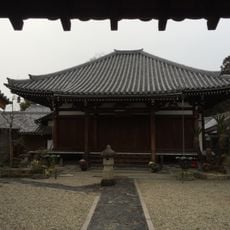
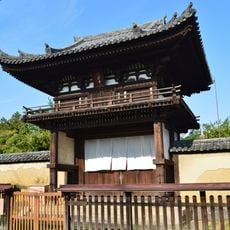
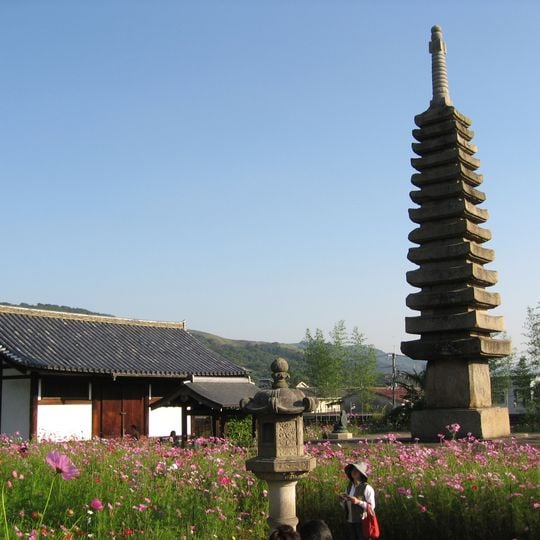
Hannya-ji is a Shingon Ritsu temple at the top of the Narazaka slope in northern Nara. Its grounds centre on a 12.6-metre thirteen-storey stone pagoda carved with four Buddhas, built around 1253 by the stonemasons Igyōmatsu and his son Igyōkichi, who came from the Southern Song. The main hall, rebuilt in 1667, houses a Monju Bosatsu riding a lion, and the tower gate facing the Kyō-kaidō is the oldest of its kind in Japan.
Official records do not document the temple's founding; Nara-period roof tiles found on the grounds show a temple stood here by the 8th century. Temple tradition credits the Goguryeo monk Hye-gwan in 629, and another tradition names Soga no Hyūga in 654. The first reliable mention is a 742 Shōsōin document, though some scholars assign it to Kataoka-dera in present-day Kashiba. Taira no Shigehira burned the temple in 1180.
The temple is known as the Cosmos Temple for the roughly 150,000 cosmos plants of some 30 varieties that bloom from June to November, peaking in autumn. The name Hannya derives from the Sanskrit prajñā, wisdom, linked to the Great Prajñāpāramitā Sūtra. The grounds also hold a stone Buddha group of the Saigoku 33 Kannon sites, donated in 1702 by the Terashima family of Yamashiro Province in thanks for recovery from illness.
The temple grounds are easy to walk around with clear pathways connecting the main structures. Comfortable shoes are recommended since you will be moving between several buildings and the pagoda on foot.
Between late September and October, around 150,000 cosmos flowers bloom on the grounds, earning the site the nickname Temple of Cosmos. This seasonal display of pink and red blooms draws many visitors who come to experience the flower-covered landscape.
The community of curious travelers
AroundUs brings together thousands of curated places, local tips, and hidden gems, enriched daily by 93,175 contributors worldwide.