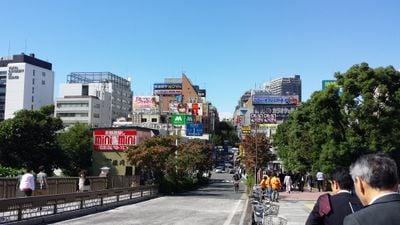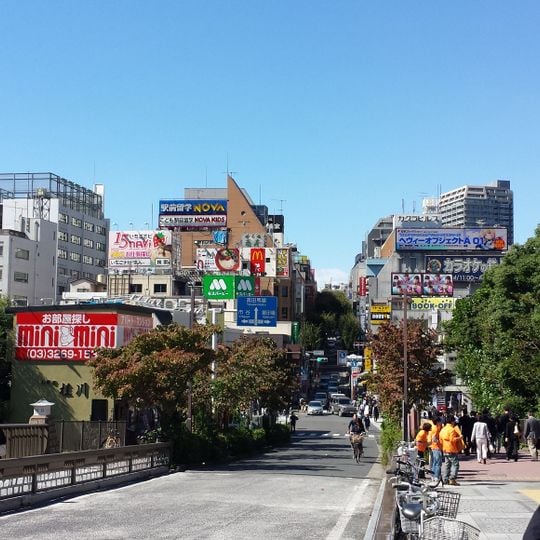
Kagurazaka, Sloping road in Shinjuku, Japan
Kagurazaka is a sloping street in Shinjuku, Tokyo, running through narrow lanes lined with wooden houses, restaurants, and shops. The paved main road climbs upward from the train station and opens into a network of tight side paths with low buildings.
The slope was laid out in 1637 together with Edo Castle's outer moat and the Ushigome gate, said to ease Tokugawa Iemitsu's visits to Sakai Tadakiyo's residence. From the Edo period the back alleys held licensed quarters; after the Meiji era banned such meeting houses in visible spots, the area became a geisha district, with about 120 ryōtei and over 700 geisha at its peak.
Houses along side lanes show wooden lattice screens that once offered privacy and now shape the traditional streetscape. Many establishments serve French cuisine alongside Japanese meals, defining daily life in the neighborhood today.
Kagurazaka's slope is a reversed one-way street: traffic runs downhill from the top toward Iidabashi in the morning and uphill in the afternoon, so check the direction before driving. The slope runs between Kagurazaka-shita at the Outer Moat-dori intersection and Kagurazaka-kami at the Okubo-dori intersection. It is served by Kagurazaka Station on the Tokyo Metro Tozai Line and Ushigome-Kagurazaka Station on the Toei Oedo Line.
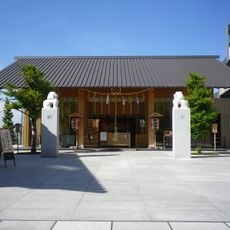
The slope's name is tied to kagura music: one account says a mikoshi could not climb the hill until kagura was played, another that the sound of kagura from Wakamiya Hachiman reached the slope. Akagi Shrine, at the top, was rebuilt with a new shrine and apartment complex by Kengo Kuma, opened in September 2010.
The community of curious travelers
AroundUs brings together thousands of curated places, local tips, and hidden gems, enriched daily by 92,790 contributors worldwide.