Chankiri Tree, Memorial tree in Choeung Ek, Cambodia
The Chankiri Tree is a Samanea saman, a rain tree with a broad, dome-shaped canopy wider than it is tall, standing on a mown lawn at the Choeung Ek memorial site near Phnom Penh. Its thick brown trunk splits into several massive, twisting limbs that reach outward and low toward the ground. The species, native to Central and South America, grows 15–25 m tall with a crown up to 30 m across.
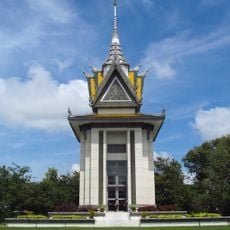
The Khmer Rouge used this tree between 1975 and 1979 as an execution site for infants and toddlers whose parents had already been killed. The grounds were part of a larger killing field where thousands of people were murdered.
In Cambodia the tree is called chankiri (ចន្ទគិរី); the official Khmer name is chamri (ចាមរី), given because its flowers resemble the long-haired tail of the chamri, the yak. Another colloquial name is ampil barang, "French tamarind". The fruit is eaten, and in famine times the young leaves were eaten in salads.
Most visitors reach the site by tuk-tuk or organized tours from Phnom Penh, which take around 45 minutes. An audio guide in multiple languages is available at the memorial center entrance and helps understand the historical context.
The tree is a Samanea saman, a species native to Central and South America that was widely introduced across Southeast Asia. In Cambodia it is called chankiri, and its Khmer name chamri refers to the flowers, which resemble the long-haired tail of the chamri, a yak-like creature in local tradition.
The community of curious travelers
AroundUs brings together thousands of curated places, local tips, and hidden gems, enriched daily by 94,072 contributors worldwide.