Tomb of King Tongmyong, Royal mausoleum in Pyongyang, North Korea
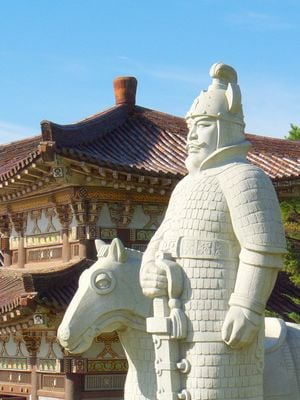
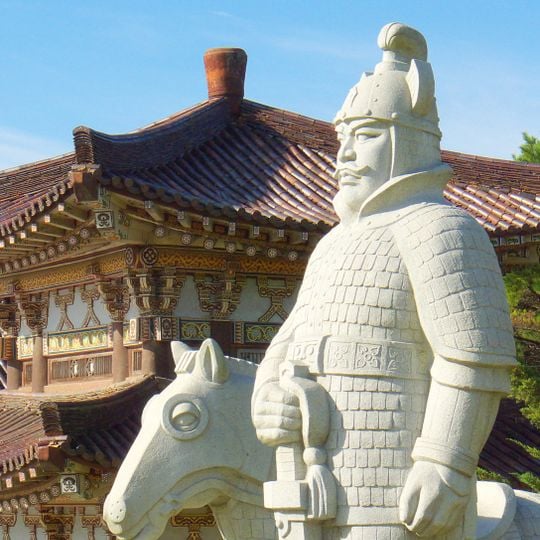
The Tomb of King Tongmyong is a two-tiered stone platform topped by a pyramid-shaped mound built of crushed stone and sandy soil over compacted red clay. Its base uses more than 160 dressed limestone blocks, larger at the four corners. In front stand a stone offering table, a stone lantern and two stone tigers, with over 30 stone figures of officials, horses and guards flanking the tomb.
This burial site was built in the 5th century and holds the remains of Jumong, the founder of the Goguryeo Kingdom. He received the name King Tongmyong after his death, which is how the tomb is known today.
The tomb's name comes from Dongmyeong, meaning "Eastern Light," the posthumous title of Jumong, founder of Goguryeo. Goguryeo's five tribes each kept an ancestral tomb and held annual rites in the tenth month, called tongmyong, a petition to the eastern heavenly deity Susin. The wall paintings of blossoming lotuses in the tombs point to Buddhist practice in the Goguryeo period.
The tomb lies near Ryongsan Village in Ryokpo-guyok, outside central Pyongyang, and visits are normally made as part of an organised tour with a guide. The mausoleum and the nearby Chongnung Temple, about 120 metres away, are separate stops within the same walled grounds. Allow time to walk the paved paths between the mound, the stone figures and the stele.
Excavations in the 1970s uncovered the remains of a Buddhist monastery that stood near the mound. This discovery shows that religious ceremonies continued at this location long after the original burial took place.
The community of curious travelers
AroundUs brings together thousands of curated places, local tips, and hidden gems, enriched daily by 94,036 contributors worldwide.