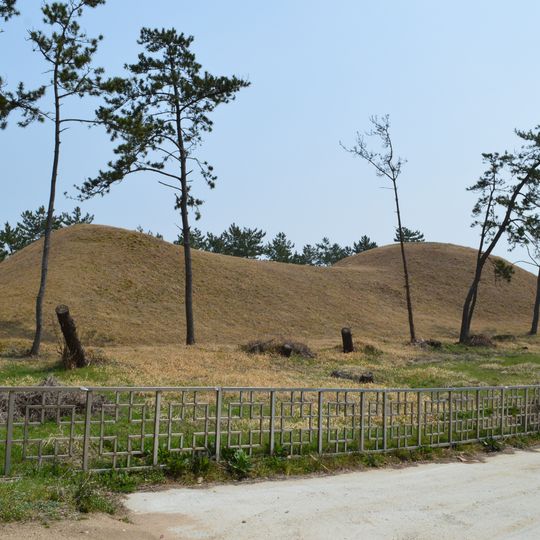
Haenam Bangsan-ri Janggobong Kofun, Ancient tomb in Haenam-gun, South Korea.
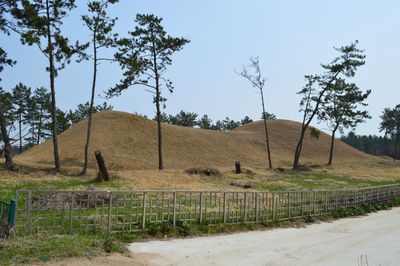
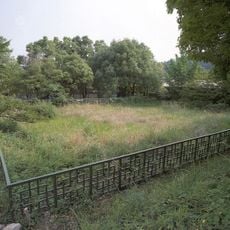
Haenam Bangsan-ri Janggobong Kofun is a keyhole-shaped earthen mound on a hill about 30 m high, roughly 1 km inland from the coast. Its round rear mound, 43 m across and 10 m high, faces the plain, while the 37 m wide, 9 m high front section points north; the total mound length is 76 m. The surface is bare soil and grass, with a horizontal stone chamber inside that is now sealed.
Built in the late 5th to early 6th century, this 76-meter keyhole-shaped mound is the southernmost and largest of about a dozen such tombs on the Korean peninsula. It was designated Jeollanam-do Monument No. 85 on 7 February 1986. Two looting incidents in the 1990s led to an emergency excavation in 2000, and full excavations took place in 2020–2021.
The name Janggobong means "long-drum peak," after the hourglass-shaped drum the mound resembles. Around it stand related tombs: the Yongil-ri stone-faced round tomb, the Sinwol-ri stone-faced square tomb, and the Oedo stone coffin burial, all showing Japanese-style elements. The mound's top now holds a modern grave.
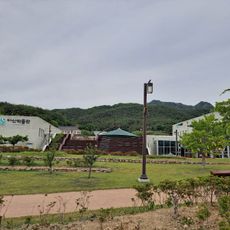
The site is openly accessible across a lawn area, allowing visitors to walk around and view the structure from different angles. Comfortable footwear is recommended, and daytime visits offer the best visibility for understanding the monument's distinctive shape.
The mound's 76 m length makes it the largest of the roughly dozen keyhole-shaped tombs in southern Korea, and it lies furthest south of them all. It sits on a hill about 30 m high, roughly 1 km inland from the coast, and its steep profile is often compared with Kuroda Otsuka Kofun in Nara Prefecture. Two modern graves on the summits and a road on the east side have slightly deformed it.
The community of curious travelers
AroundUs brings together thousands of curated places, local tips, and hidden gems, enriched daily by 94,676 contributors worldwide.