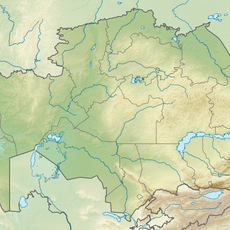
Karatau Nature Reserve, Protected natural area in Turkistan Region, Kazakhstan.
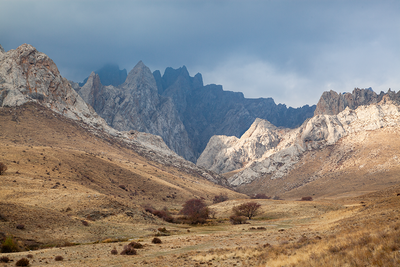
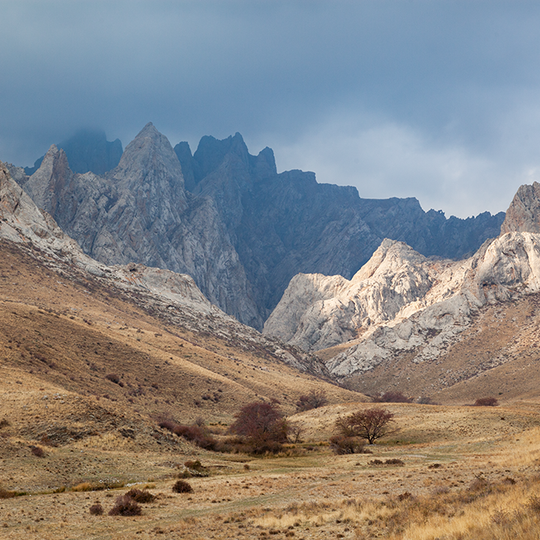
Karatau Nature Reserve spreads across a large area in the Western Tian Shan mountains and displays deep gorges with pyramid-shaped peaks and varied rock formations. The terrain is steep and rough, with jagged patterns that took millions of years to form.
The reserve was established in 2004 and was the country's newest protected zone at that time, marking a turning point for conservation efforts. This creation showed a stronger commitment to protecting the rare wildlife found in the region.
The reserve's name comes from the Karatau ridge, and its central estate sits in Kentau, 17 km from the protected land. A small museum of ethnography in the reserve displays models of the mammals found on the ridge, including the Karatau argali. Petroglyphs, ancient campsites and rock figures such as Tuyetas, Khantagy and Kempirtas record Stone, Bronze and Iron Age use of the valleys.
The reserve office is in Kentau, 17 km from the protected territory, and the nearest large town is Turkestan, 40 km away, linked to Kentau by highway. The Karatau ridge is asymmetric: the south-western slope is broad and fairly gentle, while the northern and north-eastern slopes are steep. Streams such as Bayaldyr, Biresik, Khantagi and Taldybulak carry water only seasonally and dry up at the foot of the slopes.
The reserve was created chiefly to study and protect the Karatau argali, a wild sheep (Ovis ammon nigrimontana), not a goat; the 2017 Kazakh stamp sheet shows it beside an ermine and a flower. The reserve also keeps an ethnography museum with models of the ridge's mammals.
The community of curious travelers
AroundUs brings together thousands of curated places, local tips, and hidden gems, enriched daily by 94,371 contributors worldwide.