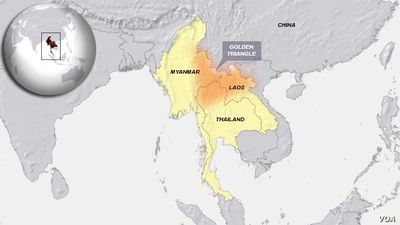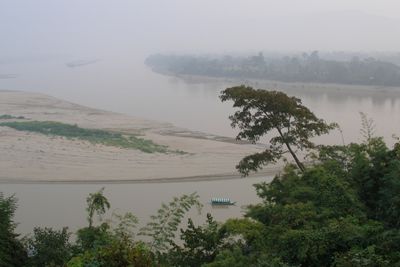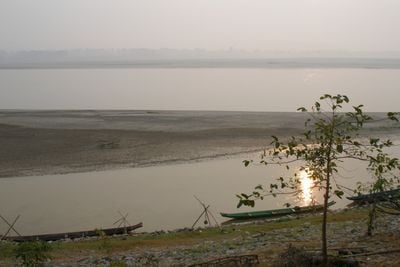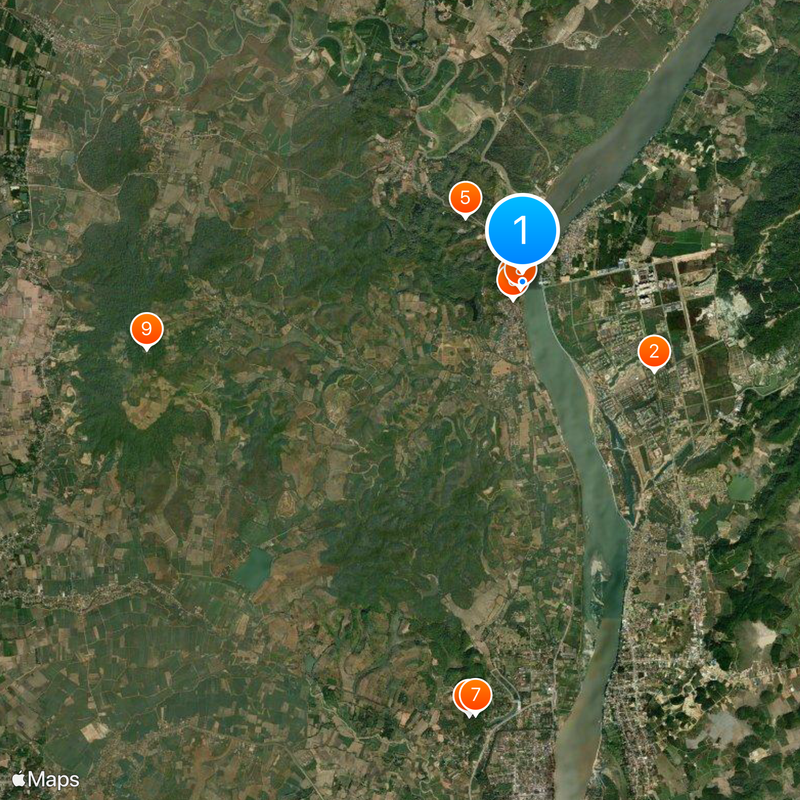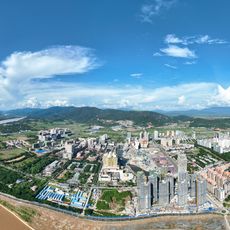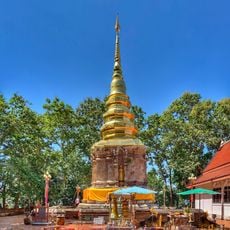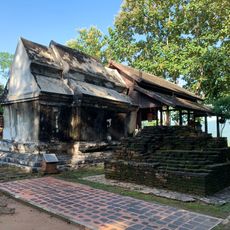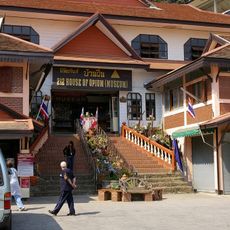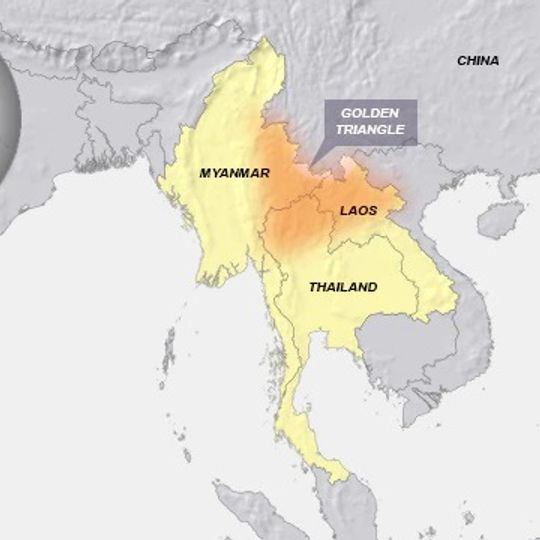
Golden Triangle, Mountainous region at Myanmar, Thailand, and Laos borders, Southeast Asia.
This area spans 200,000 square kilometers (77,200 square miles) across Myanmar, Thailand, and Laos, centered at the confluence of the Ruak and Mekong rivers. Steep mountain ranges reaching elevations up to 6,600 feet (2,000 meters) cut through the terrain, interspersed with narrow river valleys and dense forests. The subtropical climate brings heavy monsoon rains from May through October.
American diplomat Marshall Green coined the name in 1971 during discussions about regional opium production. British colonial administrations documented poppy cultivation in these mountains as early as the 19th century. After World War II, armed groups expanded production, leading to international containment efforts beginning in the 1990s.
Several mountain peoples inhabit this area and maintain their own languages, religious practices, and agricultural systems while adapting to economic changes and government modernization programs. Villages often remain isolated due to difficult terrain and limited road infrastructure, preserving traditional ways of life despite increasing external influences.
Border crossings between the three countries require specific visas obtained in advance from embassies or authorized checkpoints. Remote areas have limited medical facilities and communication networks. Travel during the rainy season can be hazardous due to landslides and flooded roads, particularly in mountain passes.
In 2023, this territory produced 1,080 metric tons of opium and became the world's largest producer as Afghanistan's output dropped to 330 metric tons under Taliban bans. Laboratories in remote jungle locations process raw material into heroin for international markets, using steep valleys and dense vegetation as cover.
The community of curious travelers
AroundUs brings together thousands of curated places, local tips, and hidden gems, enriched daily by 91,870 contributors worldwide.