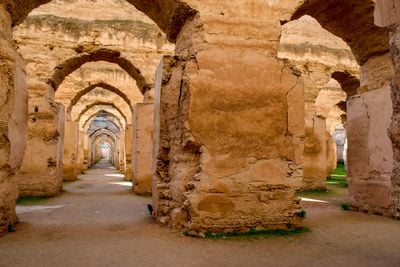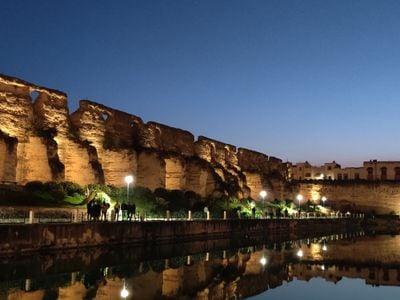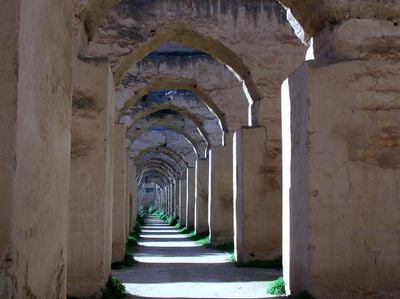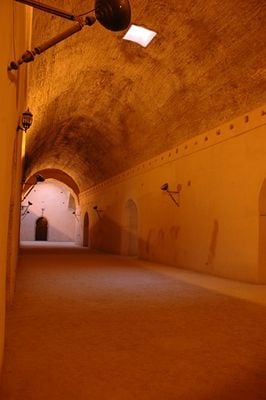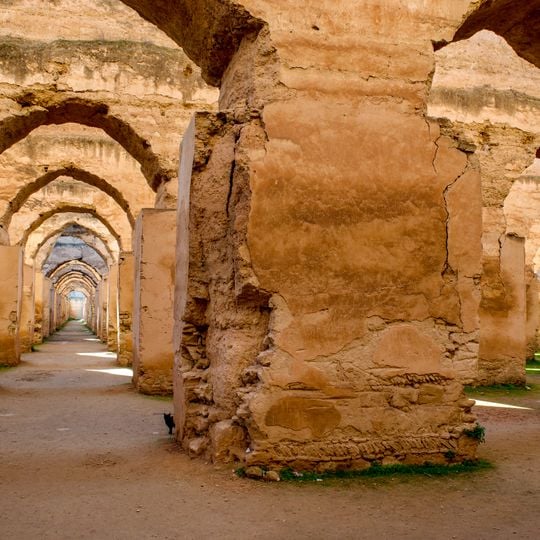
Heri es-Swani, Historic granary and water management complex in Meknes, Morocco.
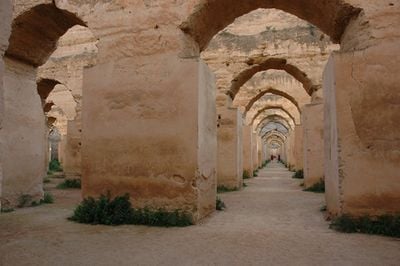
Heri es-Swani is a large-scale grain storage facility measuring approximately 182 by 104 meters, featuring multiple rows of thick arches that once supported vaulted corridors designed to hold enough grain supplies to sustain the entire city during prolonged sieges.
The complex was constructed between 1672 and 1727 under Sultan Moulay Ismail ibn Sharif, who transformed Meknes into his imperial capital and built this facility to store provisions for his court, military campaigns, and the city's population during times of war.
The architecture demonstrates traditional Moroccan design principles with its extensive use of durable masonry and symmetrical arches, combining functional military infrastructure with aesthetic elements that reflect the engineering prowess of 17th-century Moroccan builders.
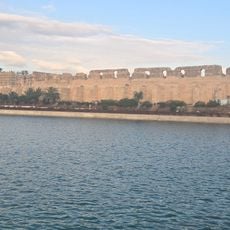
Visitors can explore the remaining arched structures of the granary, view the adjacent Agdal Basin water reservoir, and join guided tours that explain the site's role in supplying food and water to the imperial city during Sultan Moulay Ismail's reign.
The complex includes the House of the Ten Norias, which housed horse-powered water wheels that drew water from deep wells using chained buckets, representing hydraulic technology that predated similar European innovations by a full century.
The community of curious travelers
AroundUs brings together thousands of curated places, local tips, and hidden gems, enriched daily by 91,656 contributors worldwide.