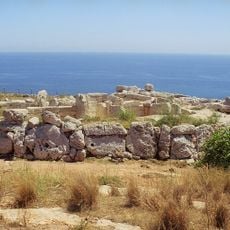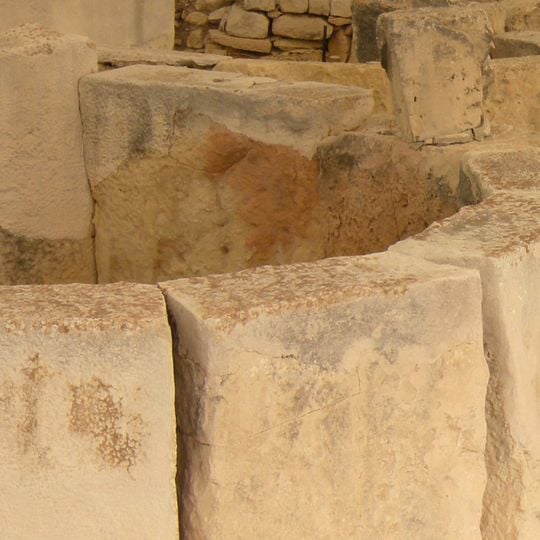
Megalithic Temples of Malta, Prehistoric temple complex in Malta.
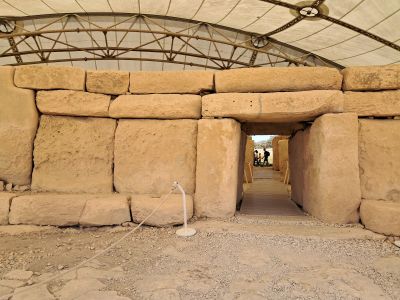
The Megalithic Temples of Malta consist of several limestone constructions with chambers, altars, and stone carvings erected between 3600 and 2500 BC. The sites spread across different locations on the island, including Mġarr, Qrendi, Tarxien, Xagħra, and Żebbieħ, each showing distinct architectural forms.
The constructions emerged during a period when the island was densely populated and no metal tools were yet available. Until the discovery of Göbekli Tepe in Turkey, they were considered the oldest free-standing buildings on Earth.
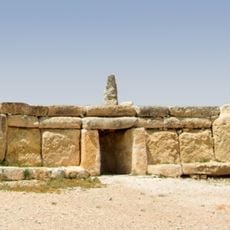
The name Ġgantija comes from the Maltese word ġgant, meaning giant, from a folklore belief that giants built the temples. Ta' Ħaġrat and Ħaġar Qim share the Maltese word ħaġar, meaning boulders; Qim may mean worship or standing. Mnajdra may derive from the Arabic mandra, a plot of cultivated trees.
Heritage Malta oversees the sites and offers regular opening hours along with tours led by trained staff. Visitors planning to see all locations should allow several days, as they are spread across the island.
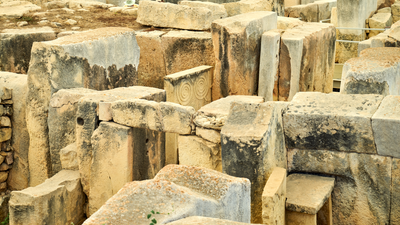
The carved block with two spirals and drilled dots, set among rough limestone slabs, is one of the decorated stones of the Tarxien phase (3150–2500 BC), when relief sculpture reached its height. The spiral motif recurs across the temple sites, and the same phase produced the free-standing figures now kept in Valletta's National Museum of Archaeology.
The community of curious travelers
AroundUs brings together thousands of curated places, local tips, and hidden gems, enriched daily by 93,399 contributors worldwide.