Brouwersdam, dam in Zeeland, Netherlands
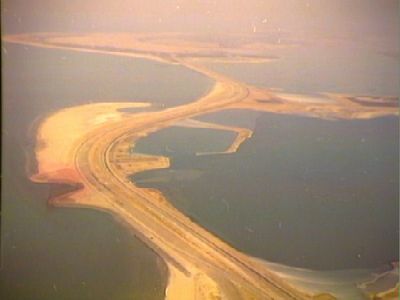
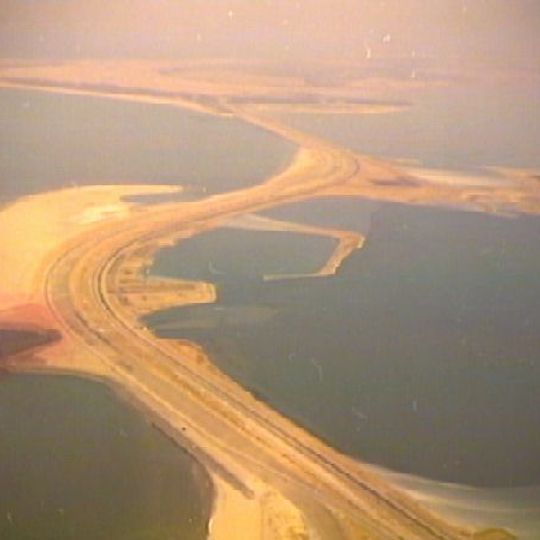
The Brouwersdam is a barrier dam in the southwestern Netherlands that connects the peninsula of Goeree-Overflakkee to the island of Schouwen-Duiveland. It separates the Grevelingenmeer lake to the north from the North Sea to the south and carries a road across its top.
The Brouwersdam was completed in 1971 as part of the Delta Works, a large coastal protection program launched after the catastrophic flood of 1953. Its closure cut off the tidal inlet behind it from the sea, turning the salt water into the freshwater Grevelingenmeer.
The Brouwersdam is well known among kitesurfers and windsurfers from across Europe, drawn by the strong and steady wind that blows here almost year-round. The north side faces the Grevelingenmeer, a sheltered lake with flat water, while the south side opens to rougher sea conditions.
A cycling and walking path runs along the dam, offering open water views on both sides throughout the route. The area is busiest in summer when beach spots and water sports facilities on both sides are in full use.
The Grevelingenmeer, created when the dam closed off the tidal inlet, is today the largest saltwater lake in western Europe because the water was never fully converted to fresh water. Its depths contain old mussel reefs that draw divers from across the continent.
The community of curious travelers
AroundUs brings together thousands of curated places, local tips, and hidden gems, enriched daily by 92,304 contributors worldwide.