Begijnhof, Medieval inner court in Amsterdam, Netherlands
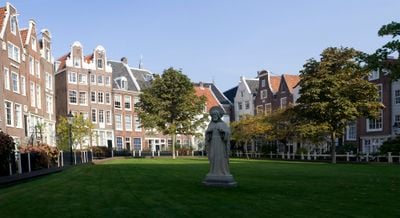
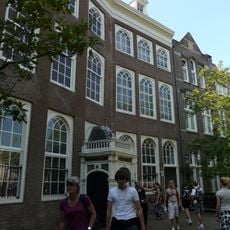
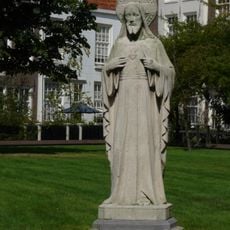
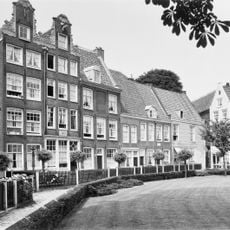
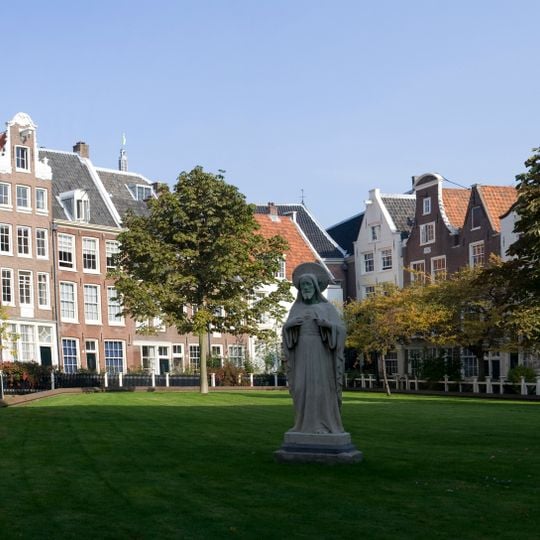
The Begijnhof is an inner courtyard in Amsterdam containing 47 townhouses arranged around a central garden, positioned about 1 meter below street level. The buildings date from different periods and create a quiet, enclosed feeling with their closely nestled arrangement.
The Begijnhof was established in 1346 as a residence for Beguines, religious women who lived independently without taking formal monastic vows. Following Amsterdam's shift to Protestantism in 1578, this compound remained under Catholic control and escaped the religious upheaval.
The name comes from the Beguines, lay religious women who took a vow of chastity but could leave the court to marry. The court's chapel was ceded to English Presbyterians after 1578, and its pulpit panels were designed by Piet Mondrian. The last beguine, Agatha Kaptein (Sister Antonia), died in 1971.
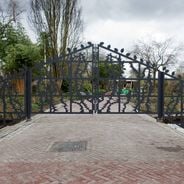
The Begijnhof lies inside the Singel, a short walk from Dam Square, and its floor sits about a metre below the surrounding streets at medieval level. The only historic entrance was the gate on the Begijnensteeg, reached by a bridge over the Begijnensloot before that canal was filled in 1865; the Spui entrance dates only from the 19th century. Visitors pass through the gatehouse into a car-free court, so keep voices low as the houses are private homes.
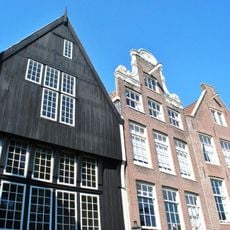
Het Houten Huys, dating from 1420, is one of the last wooden-fronted houses surviving in central Amsterdam. This rare structure reveals how early Amsterdammers built their homes.
The community of curious travelers
AroundUs brings together thousands of curated places, local tips, and hidden gems, enriched daily by 94,649 contributors worldwide.