Onze-Lieve-Vrouwekerk, Hengelo, church building in Hengelo, Netherlands
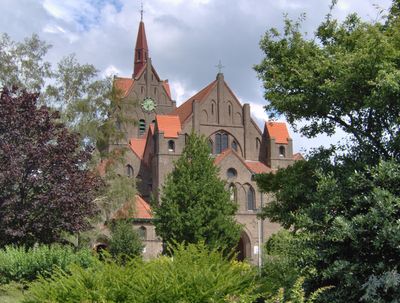
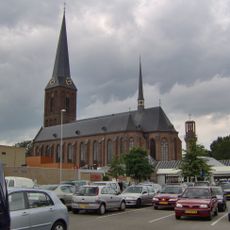
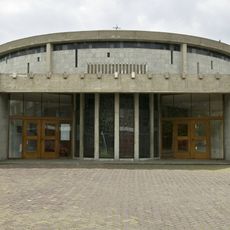
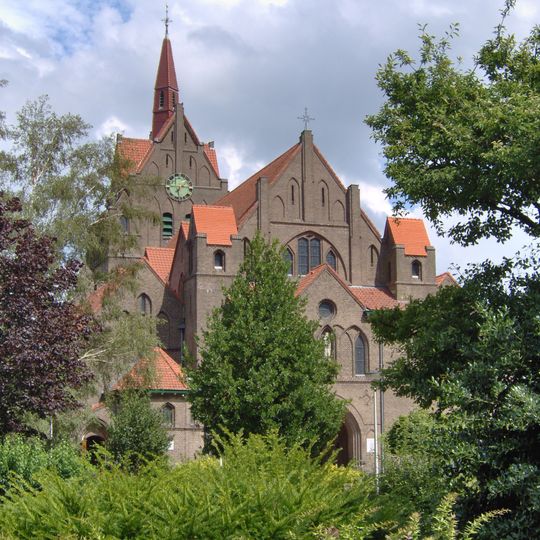
Onze-Lieve-Vrouwekerk in Hengelo is a church building made of red brick with red roof tiles, designed in 1926 by architect Wolter te Riele. The building features three naves, a square central tower, colorful stained glass windows, and structural buttresses, while a separate Mary chapel is attached to one side.
The building was completed in 1926 and consecrated on May 31, 1927, by the Archbishop of Utrecht, with the first mass held shortly after on June 5. It displays features of Neo-Gothic and Delftse School architecture, representing the reconstruction of Catholic churches in the Netherlands after 1853.
The church is named after Our Lady of Perpetual Help and stands in one of Hengelo's oldest neighborhoods called the Noork. It serves as a gathering place for prayer and quiet reflection, and remains a familiar landmark where neighbors meet.
The building sits in one of the oldest neighborhoods and is easily reached on foot; the entrance is at the front between two small towers. Visitors can enter the Mary chapel on the left side for quiet moments, and the interior is easily navigable with clear paths between the pews.
The colorful stained glass windows underwent extensive restoration between 1988 and 1990 and received protective panes to shield them from damage. A major renovation followed in 2003 when the entire building was restored to ensure its survival for future generations.
The community of curious travelers
AroundUs brings together thousands of curated places, local tips, and hidden gems, enriched daily by 92,748 contributors worldwide.