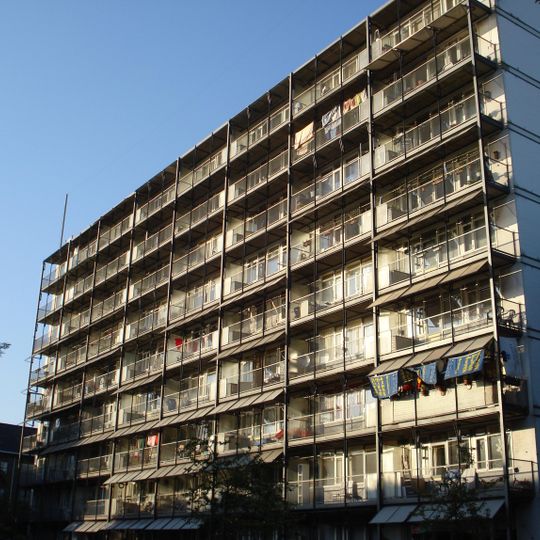
Bergpolderflat, Steel frame apartment building in Rotterdam, Netherlands
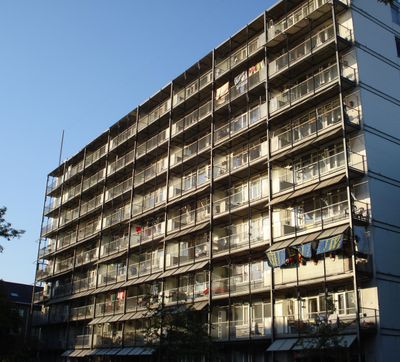
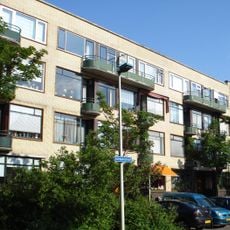
Bergpolderflat is a steel-framed residential building in Rotterdam with nine stories containing 72 apartments. The structure features large window panels and a clear design where the exposed steel frame works as a visible building system that holds everything up.
The building was constructed between 1933 and 1934 from architect Willem van Tijen's design and served as an experimental answer to the need for affordable housing for workers. Van Tijen used modern materials and building methods to fit more people in a smaller footprint.
The building embodies the ideals of Neues Bauen by combining housing for ordinary people with strict design and efficient use of materials. It shows how architects of that era tried to make something both useful and well-designed at the same time.
Residents reach their homes via 1.30-meter wide galleries connected to a central staircase, with an elevator serving all nine floors. The layout is straightforward to navigate since the building follows a regular and repeating pattern throughout its height.
Bergpolderflat was the first high-rise in the Netherlands to use access galleries as a way to reach apartments from a shared walkway. This arrangement was completely new at the time and later became standard for modern housing in densely built areas.
The community of curious travelers
AroundUs brings together thousands of curated places, local tips, and hidden gems, enriched daily by 90,871 contributors worldwide.