Stadsziekenhuis, Kampen, hospital in the Netherlands
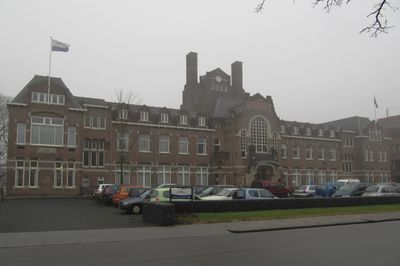
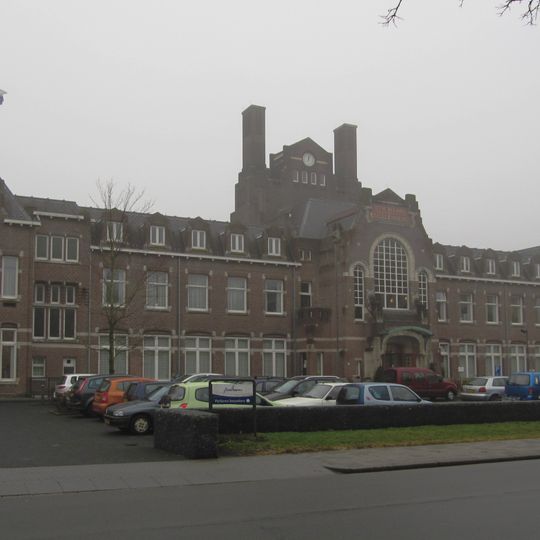
Stadsziekenhuis is a protected monument in Kampen built between 1911 and 1916 as the city's main hospital. The formal symmetrical structure features a prominent central section with a high clock tower, two rectangular ventilation towers, relief decorations, and colored glass windows.
The building was designed by architect Willem Kromhout and remains the only hospital he completed out of three planned projects. In the 1930s and 1940s, Dr. Willem Kolff worked here and developed the first artificial kidney, revolutionizing modern medicine.
The building was named after Christiaan Engelenberg, a person honored by the town. Its facade with relief decorations and colored glass windows reflects early 1900s style and continues to shape the character of its surroundings today.
The building stands in a prominent location in Kampen and is easily visible from various angles. Although the original garden has been replaced by a parking lot, the monument remains accessible and its historic facade is clearly visible from the surroundings.
This is the only hospital Architect Kromhout managed to complete, despite planning three similar projects in the country. The interior features original marble staircases, geometric floor patterns, and preserved tiles that demonstrate the craftsmanship of the early 20th-century construction.
The community of curious travelers
AroundUs brings together thousands of curated places, local tips, and hidden gems, enriched daily by 90,754 contributors worldwide.