Zuidwal volcano, Extinct stratovolcano near Harlingen, Netherlands.
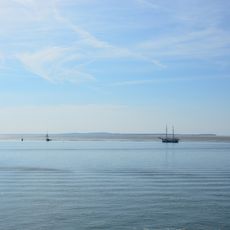
Zuidwal is a stratovolcano buried entirely beneath the Wadden Sea floor near Harlingen and discovered through drilling operations. Its structure spans several kilometers below the seabed and forms a subterranean geological formation.
Geologists from French company Elf Aquitaine encountered volcanic rock while test drilling for natural gas in 1970. Investigations revealed that this volcano was active during the Jurassic period and became extinct around 160 million years ago.
The presence of Zuidwal volcano influenced the development of gas extraction industries in northern Netherlands, leading to the establishment of important energy infrastructure.
The volcano remains inaccessible to the public because it lies completely below the seabed and has no visible surface. Scientific studies use existing boreholes and monitoring stations installed in the region.
Measurements show temperatures of 130 degrees Celsius (266 degrees Fahrenheit) in the rock, indicating stored heat from its distant volcanic past. This residual warmth remains in the underground material even after millions of years.
The community of curious travelers
AroundUs brings together thousands of curated places, local tips, and hidden gems, enriched daily by 92,184 contributors worldwide.