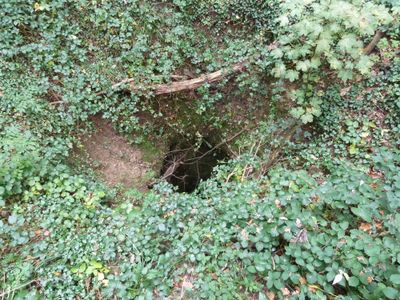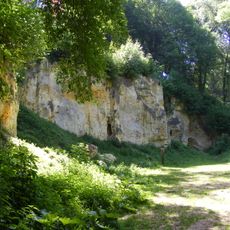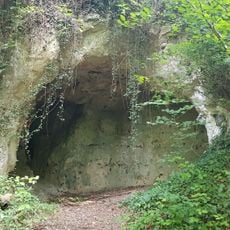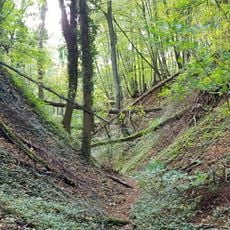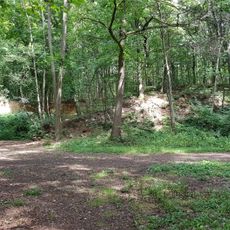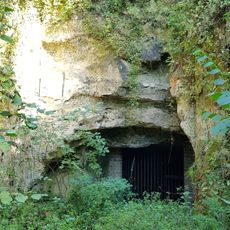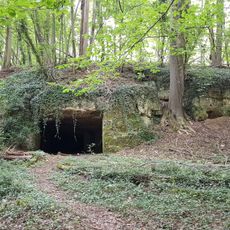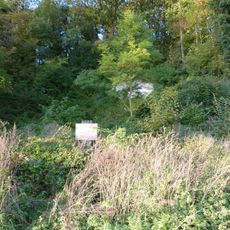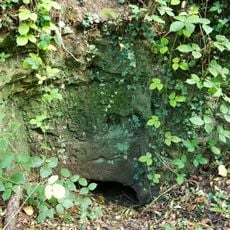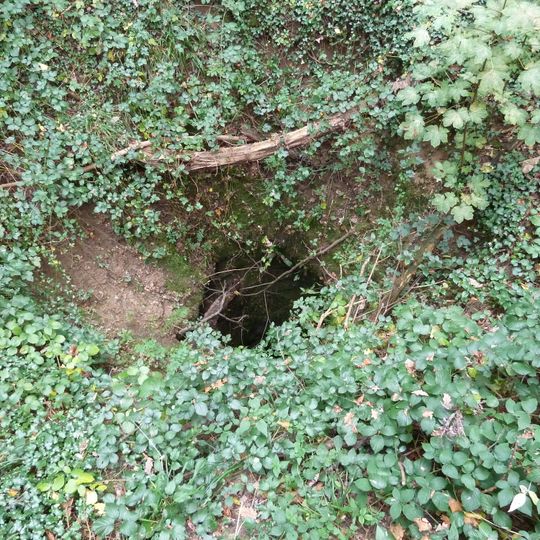
Henkeput, Sinkhole in Rijckholt, Netherlands.
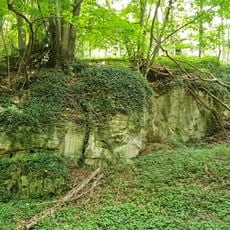
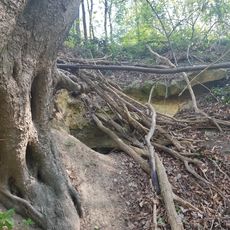
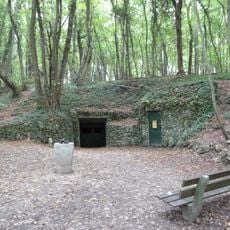
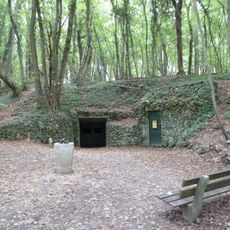
Henkeput is a sinkhole near Eijsden-Margraten shaped like a funnel that leads down into a vertical shaft about 12 meters deep. Below, the shaft opens into a dome-shaped chamber roughly 12 meters across with many small carved niches in its limestone walls.
The sinkhole was excavated in 1887 by Casimir Ubaghs, who found tool marks on the walls and Roman objects at the bottom. These findings suggest the site was used as storage and shelter as far back as Roman times.
The sinkhole contains layers of materials including bones and human remains from different periods, revealing its long use over time. These deposits show how people made use of the shaft across many centuries.
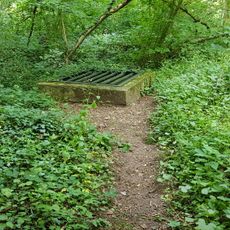
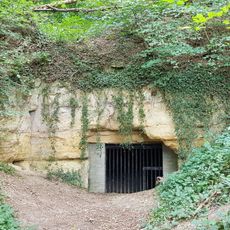
A sturdy iron fence with a viewing opening was installed around the site in 2008 to let visitors look down into the shaft safely. The railing keeps people secure while they observe the impressive underground structure.
The carved niches in the chamber walls may have originally served for storage or held religious significance, adding to the site's mystery. The true purpose of these hollows remains unclear, sparking curiosity in those who visit.
The community of curious travelers
AroundUs brings together thousands of curated places, local tips, and hidden gems, enriched daily by 92,481 contributors worldwide.