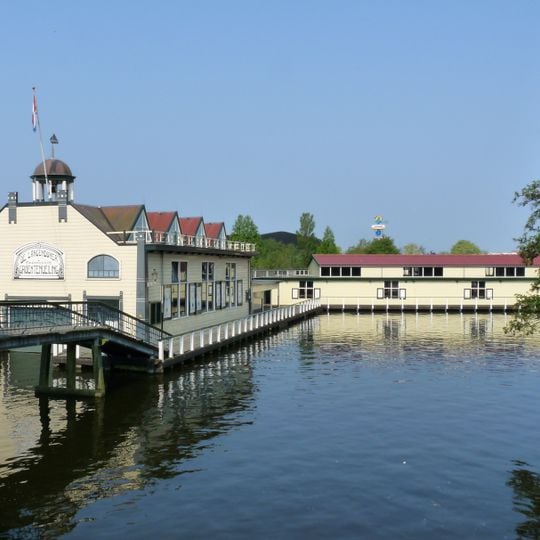
Museum Broeker Veiling, Agricultural auction museum in Broek op Langedijk, Netherlands.
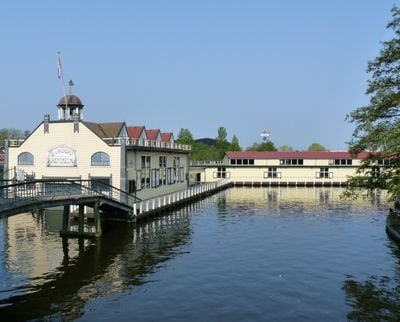
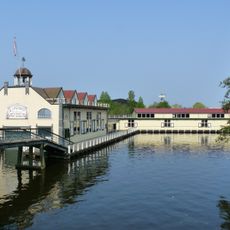
Museum Broeker Veiling is an agricultural auction house built as a wooden structure over water in Broek op Langedijk. Boats could sail directly into the main selling hall, where farmers conducted their business with the water functioning as both transport route and workplace.
Founded in 1887, this was the world's first floating vegetable auction house, pioneering a new way to conduct agricultural trade. It introduced a mechanical clock system where prices descended until a buyer signaled acceptance, creating a standardized bidding method used across many auctions.
The museum demonstrates how farmers once sold their harvest using a specific bidding method tied to a descending clock system. Visitors can observe how this trading approach shaped the local community's relationship with commerce and daily work.
This location operates seasonally, with extended hours in warmer months and reduced schedule during winter. Visitors can arrive by boat or join guided tours through the surrounding islands to experience the full context of the working landscape.
The building rests on wooden pilings in the water and reveals how communities adapted to flooding by engineering their structures differently. This construction allowed boats to navigate into upper levels during high water without disrupting the daily auction operations.
The community of curious travelers
AroundUs brings together thousands of curated places, local tips, and hidden gems, enriched daily by 91,990 contributors worldwide.