Observatory, Land art installation in Lelystad, Netherlands
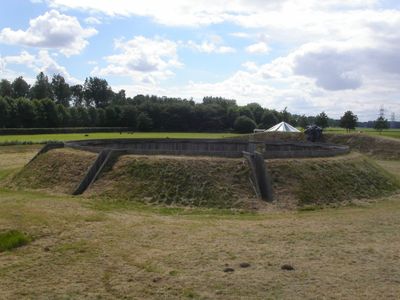
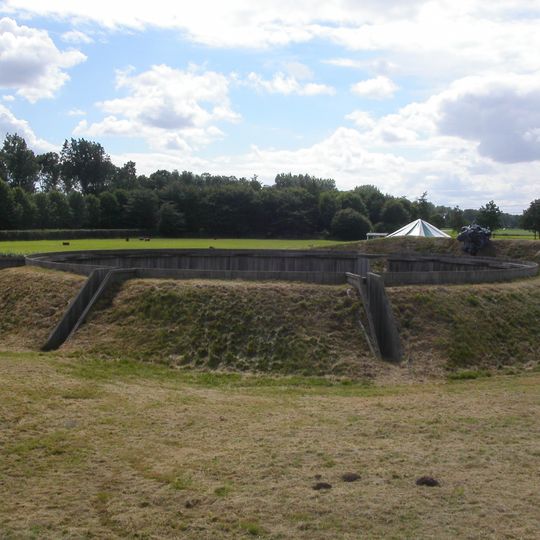
The Observatory features two circular earth walls with three triangular openings that direct your view toward specific points across the surrounding agricultural landscape. A central stone marks the best viewing position within the nearly 91-meter-wide structure.
Robert Morris designed the work in 1971 for the Sonsbeek exhibition, but it was actually built in 1977 on newly reclaimed land in the Flevoland region. This gap between conception and construction shaped how it eventually took form.
The central steel visor aligns with sunrise during equinoxes, while granite openings at the sides frame the points where the sun rises on the longest and shortest days. These astronomical alignments let you experience how ancient cultures tracked the changing seasons.
You can reach the site near Swifterringweg, where the central stone provides the best vantage point for viewing. It is open year-round and free to visit, but the location is fully exposed to weather, so dress appropriately and wear sturdy shoes.
The installation combines earth, water, grass, shells, steel, and Bavarian granite to create a modern take on ancient astronomical monuments. These varied materials allow the work to evolve naturally with the seasons and blend into the landscape.
The community of curious travelers
AroundUs brings together thousands of curated places, local tips, and hidden gems, enriched daily by 91,395 contributors worldwide.