Rijksmuseum Amsterdam - Passage, Covered passageway in Amsterdam, Netherlands
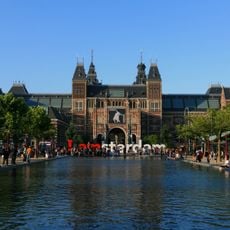
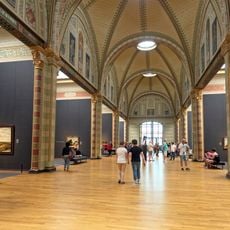
Rijksmuseum Amsterdam - Passage is a covered corridor running through the museum building in Amsterdam, stretching about 75 meters and allowing cyclists and pedestrians to cross from one side to the other. Its tall brick walls originally enclosed the route, but large glass panels now replace much of the masonry, so people outside can see into the two inner courtyards and the people inside can see the street life beyond.
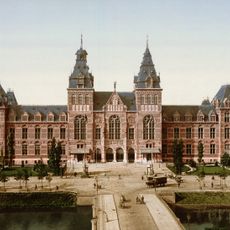
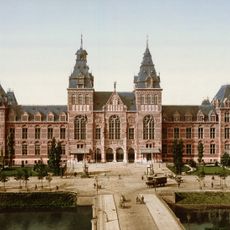
The passage was built as part of the Rijksmuseum when it opened in 1885, and it originally allowed horses, carts, and early cars to move beneath the building. In 1931, cars were banned because vibrations threatened the artworks, leaving the route to bicycles and pedestrians, and that change remains in force today.
Street musicians often stop under the vaulted ceiling because the hard surfaces carry the sound in a way that makes a violin or a voice seem larger than the space itself. The corridor works as a small open-air stage even in the rain, drawing a changing audience of commuters, tourists, and school groups who pause for a moment before moving on.
The route is open all day and night, so you can cross even when the museum galleries are closed. Keep to the sides when walking, because the central space is shared with a steady flow of bicycles and you may not hear them approach from behind.
Look up and you may notice a narrow slot in the ceiling, known as the Nightwatch slot, built so that large paintings can be lowered through the floor directly from the gallery. It was added in 1934 for emergencies, and it has been used to move Rembrandt's Night Watch out of the building when the collection needed to be protected.
The community of curious travelers
AroundUs brings together thousands of curated places, local tips, and hidden gems, enriched daily by 92,450 contributors worldwide.