Mulciber, Extinct volcano in North Sea, Netherlands
Mulciber is an extinct volcano buried approximately 3300 meters below the North Sea floor, roughly 100 kilometers northwest of Terschelling. Its existence was revealed through seismic surveys and magnetic field measurements that researchers discovered while studying the seafloor for petroleum exploration.
The volcano last erupted during the Late Jurassic period, approximately 150 million years ago, when underwater volcanic activity shaped much of the North Sea floor. This ancient activity created the mineral deposits and rock formations that scientists detect today.
The Netherlands Organisation for Applied Scientific Research discovered this geological formation while examining old seafloor maps during petroleum exploration activities.
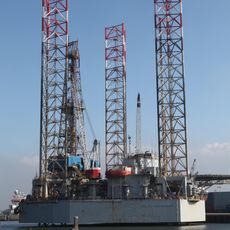
Studying this underwater formation happens only through remote sensing and scientific drilling operations from research vessels. Visitors cannot access the site directly, but nearby museums and research institutions sometimes display core samples and data visualizations from the area.
Magnetic minerals in the volcano's rock create detectable deviations in Earth's magnetic field, leaving signatures that researchers can pinpoint with specialized instruments. These anomalies serve as key evidence for mapping and understanding subsurface volcanic structures.
The community of curious travelers
AroundUs brings together thousands of curated places, local tips, and hidden gems, enriched daily by 92,266 contributors worldwide.