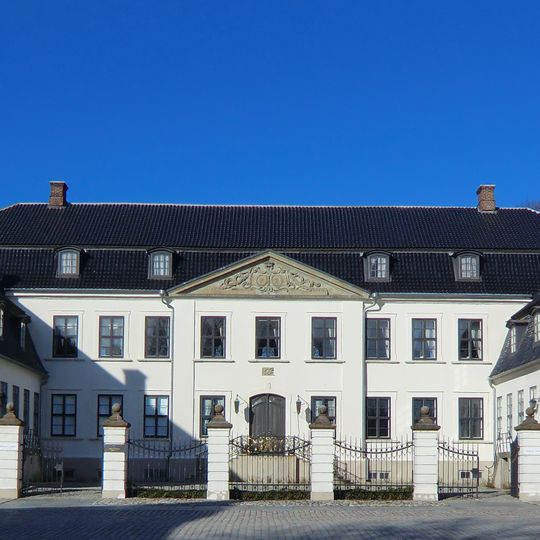
Hafslund Manor, building in Sarpsborg, Eastern Norway
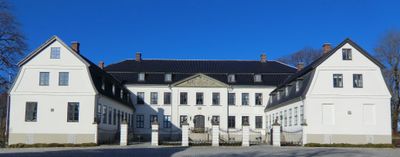
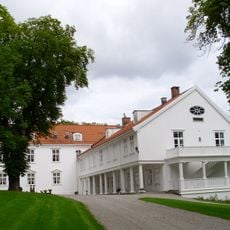
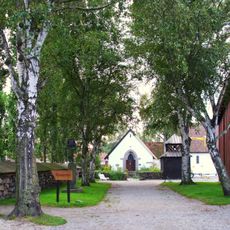
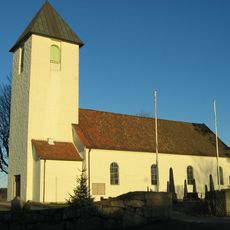
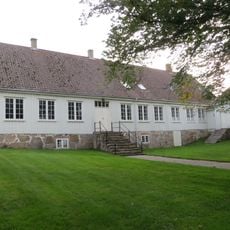
Hafslund Manor is a manor house and former farm in Sarpsborg Municipality, sitting close to the Glomma River in Norway. The main building is made of wood and brick, arranged in three sections around a courtyard, with fields and forest covering most of the surrounding land.
Hafslund appears in written records from 1344, when it was part of a large landholding belonging to Haftor Jonsson and connected to the crown, before passing through the hands of the Gyldenhorn family and later owners such as Otte Bildt and Werner Nielsen. The house standing today was built in 1761, replacing an older structure lost to fire.
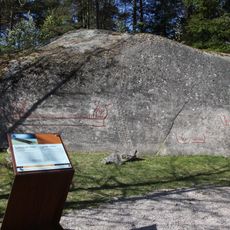
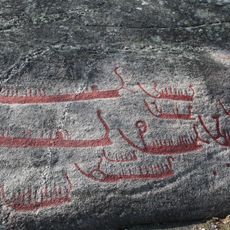
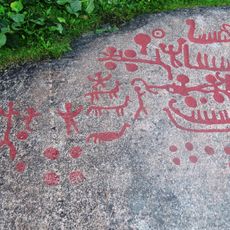
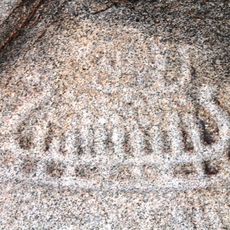
The name Hafslund comes from Old Norse, combining a personal name with a word meaning grove or clearing, pointing to a very old bond between this land and the people who lived on it. Visitors can still see Bronze Age rock carvings nearby, showing that people were using this place long before the manor house was ever built.
The grounds can be explored on foot along simple paths that cross open fields, forest, and land near the river, so sturdy shoes are a good idea depending on the season. Conditions change throughout the year, and the paths can be muddy in spring or after rain.
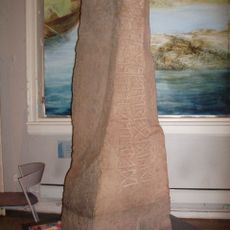
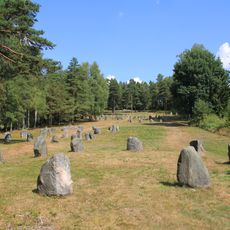
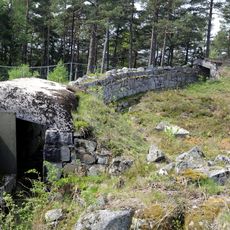
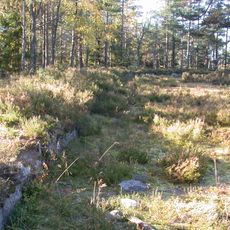
The estate holds Iron Age burial mounds alongside rock carvings brought from a nearby island that are around 3,000 years old, making this one of the few manor grounds in the region where prehistoric traces sit alongside a historic house. These features are easy to miss for visitors who stay close to the main building.
The community of curious travelers
AroundUs brings together thousands of curated places, local tips, and hidden gems, enriched daily by 92,355 contributors worldwide.