Divine Mercy Shrine, Religious monument in El Salvador, Misamis Oriental, Philippines.
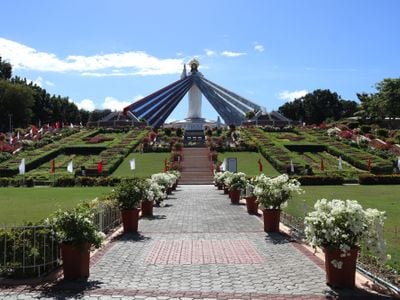
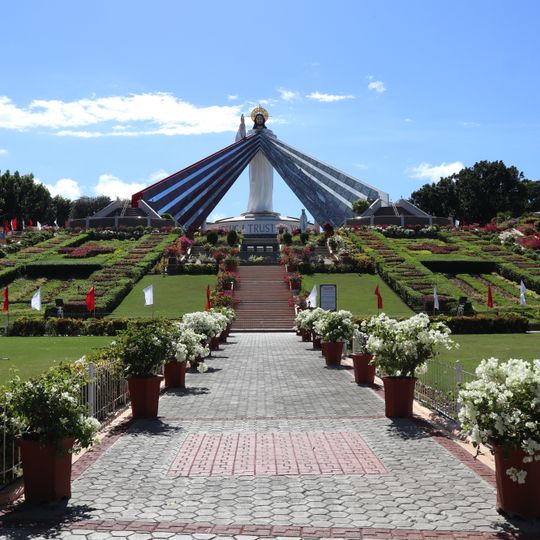
The complex features a 50-foot white statue of Jesus Christ positioned atop a hillside structure overlooking Macajalar Bay. The figure stands on a multi-level building housing chapels and prayer rooms. Gardens with religious displays surround the central monument area. A grand stairway connects different levels of the nine-hectare grounds. Parking facilities and visitor amenities are located at the base of the hill. The elevated position provides views across the Mindanao coastline.
The complex was established in 2008 through donations from faithful supporters on a nine-hectare property in El Salvador. The initiative originated with local Catholic communities seeking to create a center for Divine Mercy devotion. Construction took several years and included building the statue along with accompanying religious facilities. After completion, the site quickly developed into a significant pilgrimage destination. Regular expansions have added more prayer spaces and visitor facilities over time. The shrine now receives thousands of pilgrims annually from across the Philippines and neighboring countries.
The statue represents the vision of Saint Faustina Kowalska, depicting Jesus with rays of mercy flowing from his heart. This shrine serves as a major pilgrimage destination for Catholics from Mindanao and the Visayas regions. Pilgrims travel here to observe Divine Mercy Sunday and participate in prayer devotions. The complex provides space for religious retreats and spiritual renewal. Local communities organize regular processions and novenas throughout the year. The monument strengthens devotion to Divine Mercy across the Philippines.
The site is accessible by car or public transport from Cagayan de Oro, approximately 30 minutes away. Visitors can climb through the interior of the statue, with 200 steps connecting various levels. A healing chapel is located within the structure. The grounds are open daily for pilgrims and tourists, with morning masses on weekdays and multiple services on Sundays. Modest clothing is expected for entry to religious areas. Basic facilities including restrooms and seating areas are available on site.
The statue contains an adoration chamber within the chest area, offering a secluded space for prayer and meditation. This concealed room is not visible from outside and can only be reached through an internal staircase. The chamber window provides pilgrims with a direct view of the bay during their devotions. The room accommodates only a small number of visitors at a time. This architectural feature combines religious symbolism with functional design in an uncommon way. Many pilgrims consider their time in this chamber particularly meaningful for their spiritual experience.
The community of curious travelers
AroundUs brings together thousands of curated places, local tips, and hidden gems, enriched daily by 60,000 contributors worldwide.