Jasna Góra, Religious sanctuary in Częstochowa, Poland
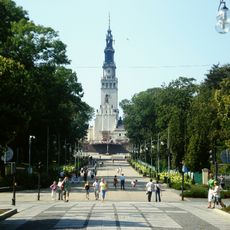
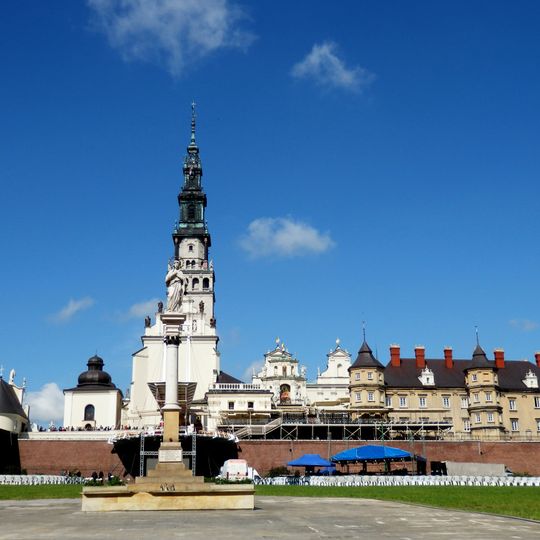
Jasna Góra is a fortified monastery standing on a low hill above Częstochowa, enclosed by thick walls and corner bastions added in the 1600s. Inside lie several church halls, a tall bell tower with multiple levels, and covered walkways that form courtyards paved with stone.
Pauline monks from Hungary arrived in 1382 at the invitation of Prince Władysław Opolczyk, who entrusted them with the Black Madonna icon two years later. In 1430 robbers sacked the monastery and slashed the image, which was restored in Kraków and returned in 1434. During the Swedish siege from November to December 1655, about 160 soldiers and fewer than 100 monks under prior Augustyn Kordecki held the fortress against some 4,000 Swedes with 36 guns.
Pilgrims have walked to Jasna Góra in groups since the Middle Ages; in 2011 about 830,000 people joined 228 organised pilgrimages, some 144,000 of them arriving on foot after an average of 350 km in 11 days. Visitors are expected to keep silent inside, and many pass the Black Madonna icon on their knees.
The grounds open before dawn and close late in the evening, giving visitors time to walk through chapels, courtyards and the museum halls at their own pace. Guided tours run in several languages, but those exploring alone can follow signs and panel displays set along the main routes.
The treasury holds the gold medal Lech Wałęsa received for the Nobel Peace Prize in 1983, displayed alongside medieval manuscripts and reliquaries. Underneath the main courtyard run defense tunnels built during the Swedish wars, accessible on special guided walks when staff open the iron gates.
The community of curious travelers
AroundUs brings together thousands of curated places, local tips, and hidden gems, enriched daily by 92,276 contributors worldwide.