Museum of Kashubian-Pomeranian Literature and Music, Gothic Revival palace with regional museum in Wejherowo, Poland.
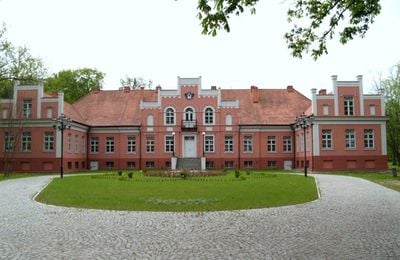
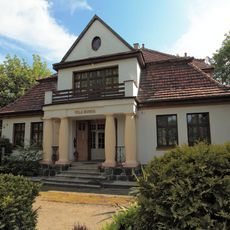
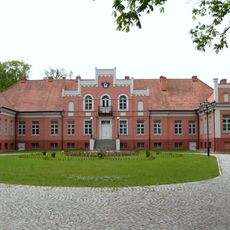
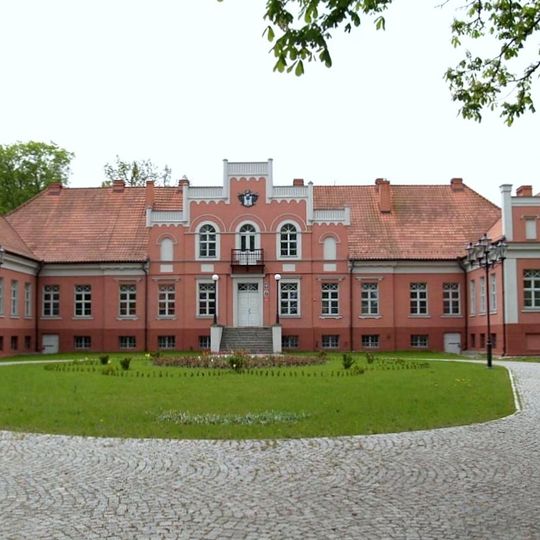
The Museum of Kashubian-Pomeranian Literature and Music occupies a single-storey palace on a high foundation, covered by a half-hipped roof. The central entrance, reached by steps, sits beneath a two-storey stepped gable; forward-projecting wings on either side also carry stepped gables facing the front. Above the entrance, a cartouche bears the Keyserlingk family coat of arms.
The palace was built in the 18th and 19th centuries. From 1767 to 1782 the estate belonged to the Przebendowski family, then to the English merchant Alexander Gibson until 1790. The Keyserlingk family owned it from 1790 to 1945. After the war it housed a forestry school, a dormitory and a kindergarten, and in 1995 it became the seat of the Museum of Kashubian-Pomeranian Literature and Music.
The museum displays manuscripts, old prints, and traditional instruments from the Kashubian-Pomeranian region that shaped daily life here. These objects tell stories about how people lived and expressed themselves through music and craftsmanship.
The museum occupies the Przebendowski Palace, a single-storey building on a high foundation with a stepped gable and a cartouche of the Keyserlingk coat of arms above the entrance. The main door is reached by a central flight of steps, with wings projecting forward on both sides. Visitors enter through this front elevation.
The museum runs the Kashubian Granary of Memory project, which records biographical stories directly from elderly residents. This work preserves history through the voices and memories of those who lived through it.
The community of curious travelers
AroundUs brings together thousands of curated places, local tips, and hidden gems, enriched daily by 94,673 contributors worldwide.