Palace in Jeleniów, Ruinous baroque palace in Jeleniów, Lower Silesian Voivodeship, Poland
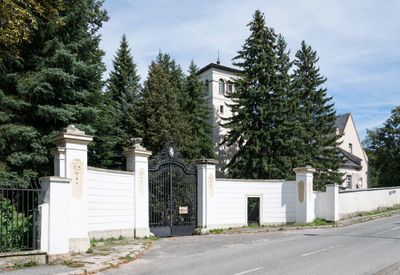
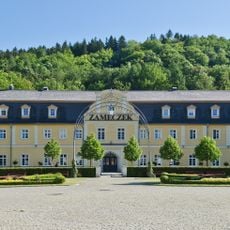
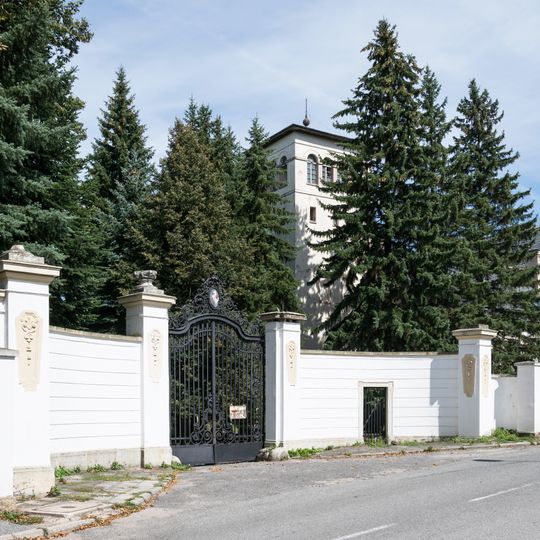
The Palace in Jeleniów is a large baroque building set on a gentle slope with thick walls, tall narrow windows, and many small dormer windows across the roof. The structure has a formal, symmetrical appearance with decorative details around the windows and doors, and inside feature large rooms with high ceilings.
A Gothic core was extended in Baroque style and later given a late Neoclassical addition. In 1788 Justizrat Franz Bernhard von Mutius acquired the estate; his nephew Carl von Mutius added an eastern wing in Neorenaissance style around 1850, along with the Carlshof farm and the park. The von Mutius family held the property until 1946, when they were expelled.
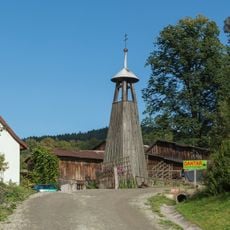
The estate's farmyard north of the palace, built 1840–1852 by Carl von Mutius, includes a barn whose gateway bears the German inscription "Carls Hof". The palace park was laid out after 1850. Dagmar von Mutius, who managed the estate during World War II, later wrote the novel "Wetterleuchten" about the war's end and the family's expulsion in 1946.
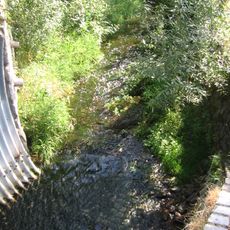
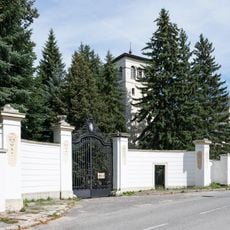
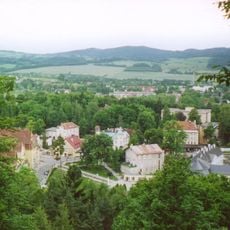
The palace is a ruin and cannot be entered; it stands in Jeleniów, in the Kłodzko district, within the former Hummel estate. The grounds include farm buildings around a courtyard north of the palace, across the Dańczówka stream, and a park laid out after 1850. The complex is a listed monument, so view the buildings from outside and leave the unstable structure alone.
The palace is now a ruin: a roof-truss fire damaged the baroque wing, after which the building was left to decay. Before that it had served as a holiday home from 1963 and as a hotel in the 1970s. The estate around it, with its farmyard and park, was laid out by Carl von Mutius around 1850.
The community of curious travelers
AroundUs brings together thousands of curated places, local tips, and hidden gems, enriched daily by 94,583 contributors worldwide.