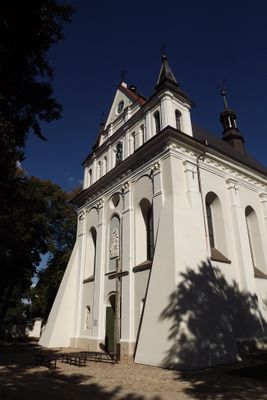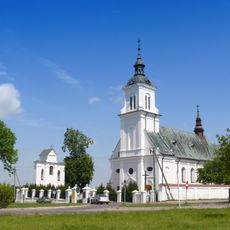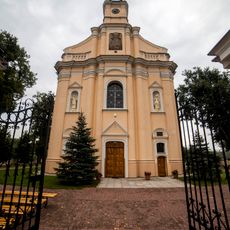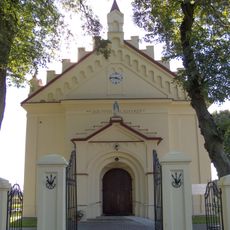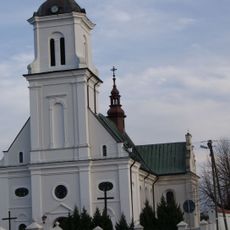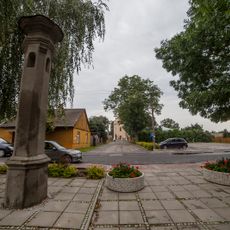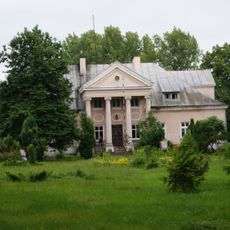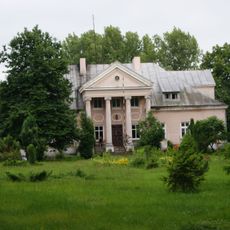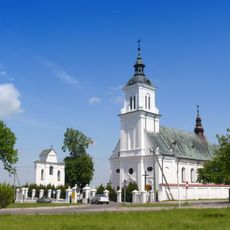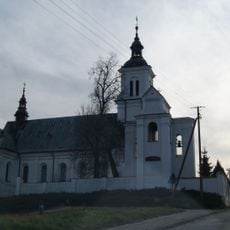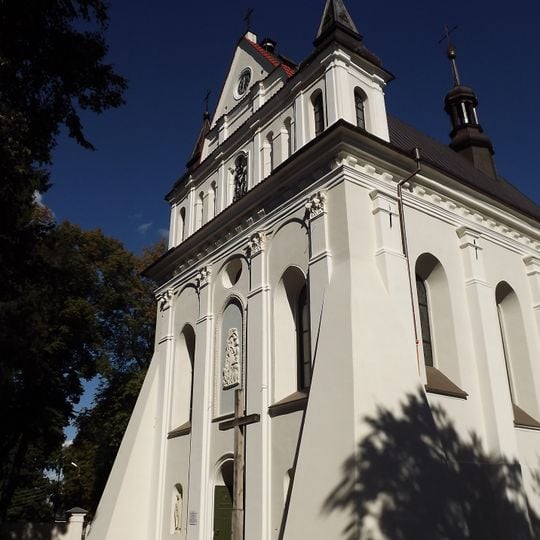
Mary Magdalene church in Łęczna, Renaissance church in Łęczna, Poland.
The Church of St. Mary Magdalene is a single-nave brick-and-stone church built as a cross, about 45 m long and 20 m wide, with a lower, narrower chancel and two rectangular chapels on the north and south sides. Its one-storey facade is divided into three bays by pilasters, and a sacristy stands next to the chancel.
The church was built between 1618 and 1631 in the late Renaissance style. Its founder was Adam Noskowski, then owner of Łęczna, and the builder was most likely Jan Wolff, a leading mason of the Zamość ordynacja. It was consecrated in 1631 by Bishop Tomasz Oborski.
The parish takes its name from Mary Magdalene, to whom the church was dedicated at its consecration in 1631 by Bishop Tomasz Oborski. Inside hang Baroque portraits of King Jan III Sobieski and of Wacław Rzewuski, a later owner of Łęczna, and the crypt holds the tombs of Noskowski and Firlej heirs. The church lies on the Lublin Renaissance Route.
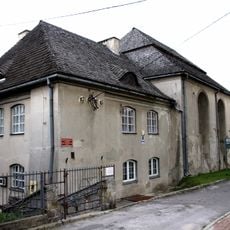
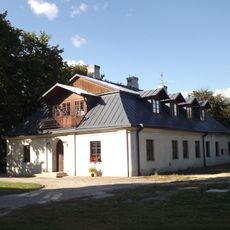
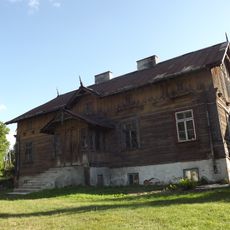
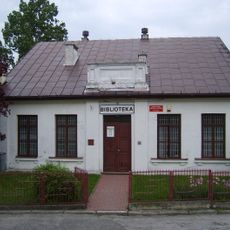
The church stands on the Lubelski Szlak Renesansu, about 25 km east of Lublin. The late-Baroque bell tower beside it, built between 1781 and 1805, held four bells in 1805; three new ones were hung in 1959 and a fourth in 1966. The former wooden parish house, built around 1858 by Father Bolesław Wrześniewski, and the later-Baroque mansjonaria, now the parish house, stand nearby.
The church stands on the Lubelskie Renaissance Route, a tourist trail linking late-Renaissance buildings of the Lublin region. Its builder was probably Jan Wolff, a leading mason of the Zamość ordynacja, and the church was consecrated in 1631 by Bishop Tomasz Oborski.
The community of curious travelers
AroundUs brings together thousands of curated places, local tips, and hidden gems, enriched daily by 94,701 contributors worldwide.