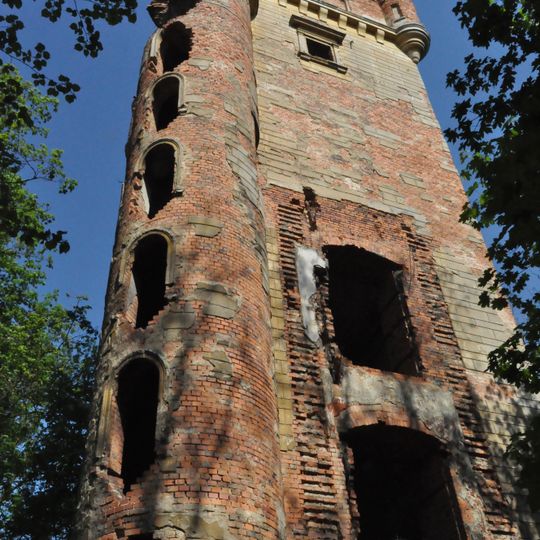
Palace in Chwalimierz, Heritage palace in Chwalimierz, Poland
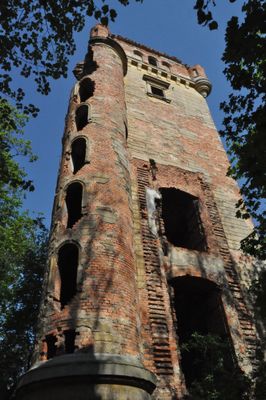
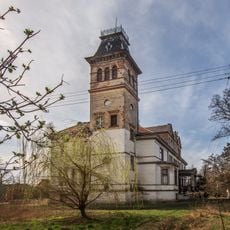
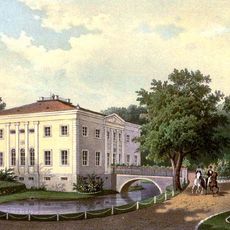
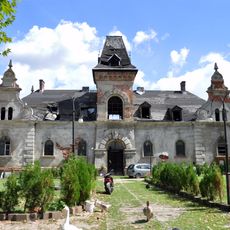
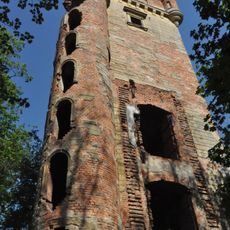
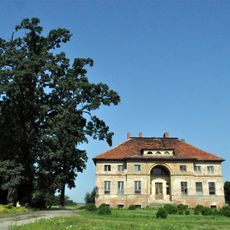
The Palace in Chwalimierz (Schloss Frankenthal) was a neo-Renaissance residence built in 1884–1885 for Georg von Kramsta, probably to a design by the Wrocław architect Carl Schmidt. The building was demolished after the 1960s; in the park there remain the ruin of a tower bearing von Kramsta's coat of arms, a terrace and a gloriette.
Georg von Kramsta built the palace in 1884–1885 in the Neo-Renaissance style, with the design attributed to the Wrocław architect Carl Schmidt. It was long known for its luxury. After World War II it was devastated; it still stood in fair technical condition in the early 1960s, but the building was later dismantled. Only the tower ruin with Kramsta's coat of arms, the terrace and the gloriette remain in the park.
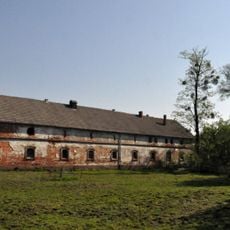
The palace's German name, Schloss Frankenthal, survives alongside the Polish one. The estate was founded by Georg von Kramsta, whose coat of arms remains on the ruined tower. The surrounding folwark still holds a manager's house from around 1910, a forge and farm buildings raised after 1890, and a garden laid out in the second half of the 19th century.
The palace itself no longer stands: only the tower ruin with Georg von Kramsta's coat of arms, the terrace and the gloriette survive deep in the park, which continues into forest. The farm complex beside it, with the manager's house of around 1910, the forge, three cattle barns, two barns, a granary and stables, can be seen from the outside. Relics of a boundary wall, cobblestone paving and a moat from around 1900 lie nearby.
The palace no longer stands: it was demolished after standing in fair technical condition into the early 1960s. What remains deep in the park is mainly the ruined tower bearing Georg von Kramsta's coat of arms, plus a terrace and a gloriette.
The community of curious travelers
AroundUs brings together thousands of curated places, local tips, and hidden gems, enriched daily by 94,218 contributors worldwide.