Manor in Cielętniki, Classicist manor in Cielętniki, Poland
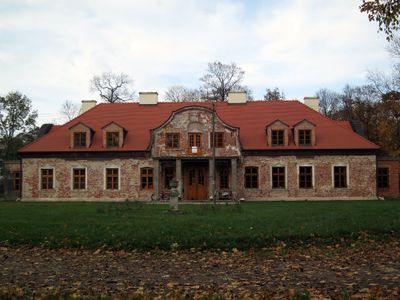
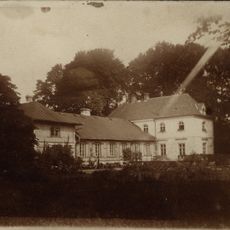
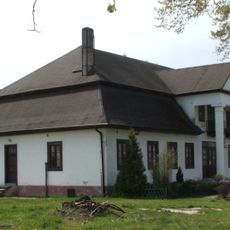
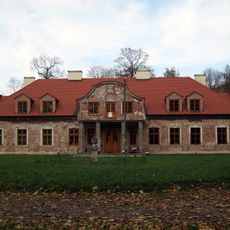
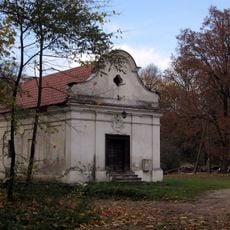
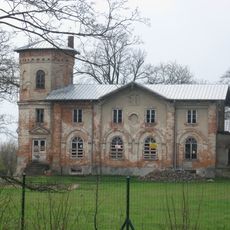
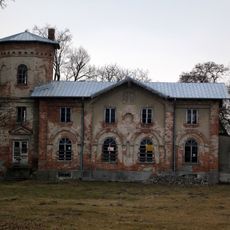
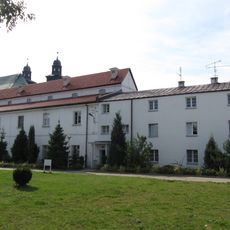
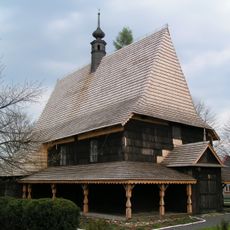
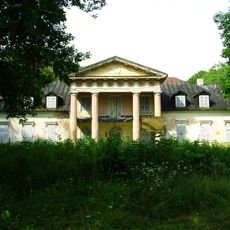
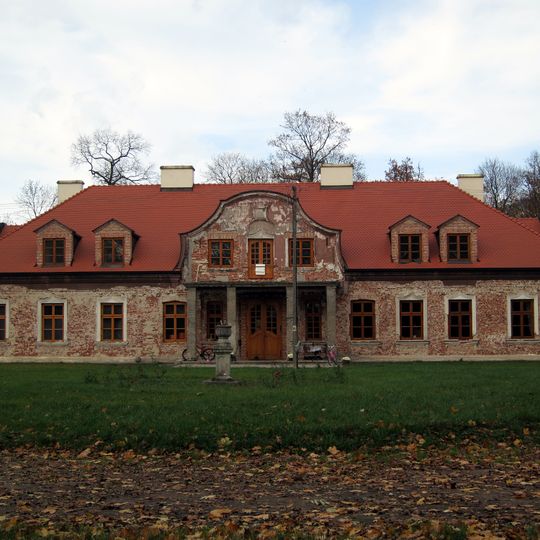
The Manor in Cielętniki is a brick, single-storey classicist building erected in 1725 on a rectangular plan with a gabled roof. Its front facade has a small upper storey with a projecting bay and a balcony on four columns; the side walls end in rounded gables, and the rear has a projection with columns and a triangular pediment. A Baroque Arian chapel, later used as a granary, survives on the estate.
The manor was built in 1725 in the classicist style for the Bystrzanowski family of the Starykoń coat of arms. In the mid-18th century it passed to the Torguł family, and in the mid-19th century to the Kołaczkowscy, who had to leave after taking part in the January Uprising. After World War I the estate was bought in 1928 by Stefan Steinhagen, owner of the Senger-Steinhagen paper concern.
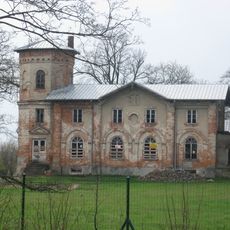
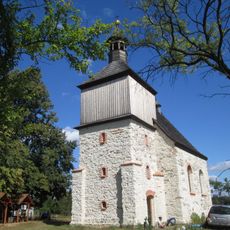
The manor's name comes from the village of Cielętniki in the Częstochowa district. The 18th-century lamus, later a chapel, was built by the Maj brothers of the Starykoń coat of arms as a Polish Brethren meeting house. The 19th-century distillery and the remains of the park with its drive and monumental trees survive.
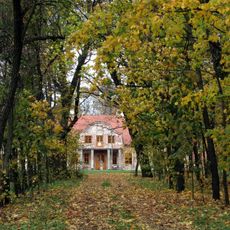
The manor stands in Cielętniki in Dąbrowa Zielona commune, Częstochowa County. The building is privately owned and under renovation to restore its original character, so it is not open as a hotel. Fragments of the landscape park survive with a driveway, monumental trees, an orchard, a pond and the 19th-century distillery.
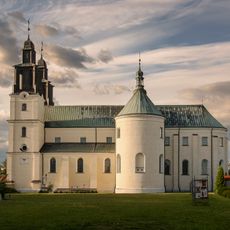
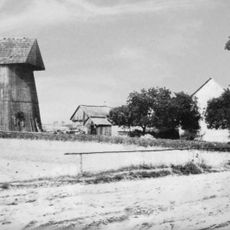
The 18th-century lamus, later a chapel, was built by the Maj brothers of the Starykoń coat of arms as a Polish Brethren meeting house. The estate also kept fish ponds, a sawmill, a mill and a distillery; a 19th-century distillery building survives.
The community of curious travelers
AroundUs brings together thousands of curated places, local tips, and hidden gems, enriched daily by 94,114 contributors worldwide.