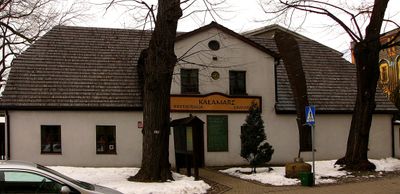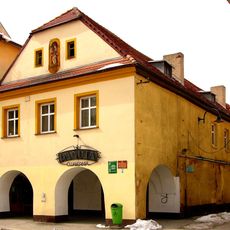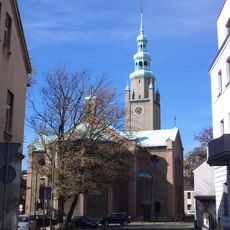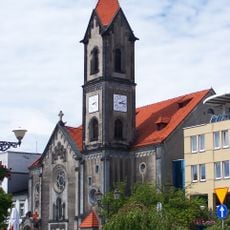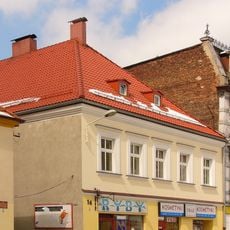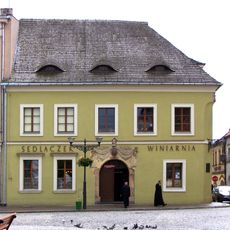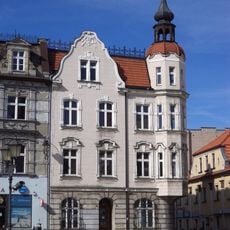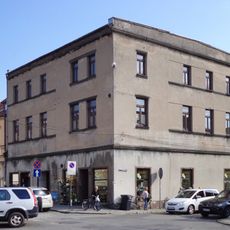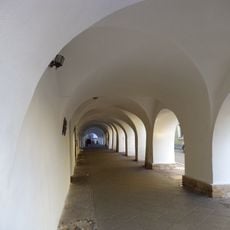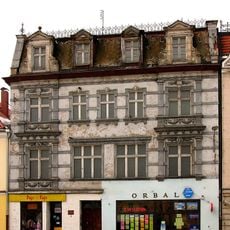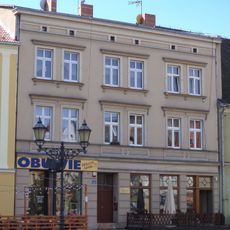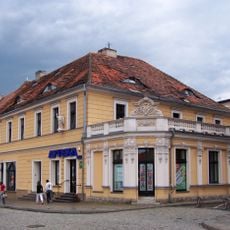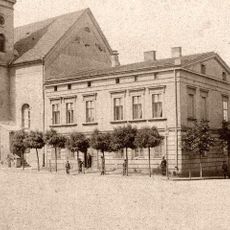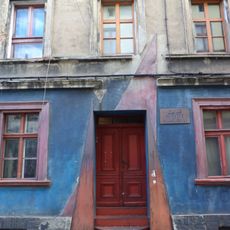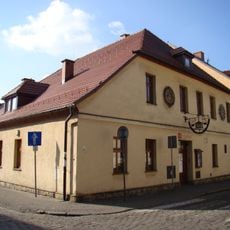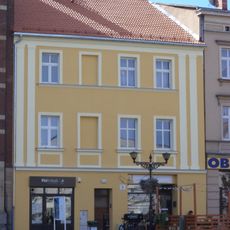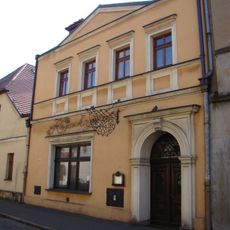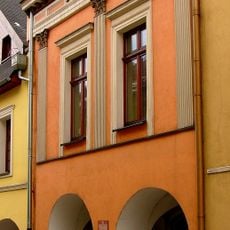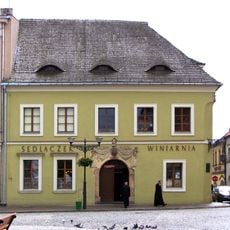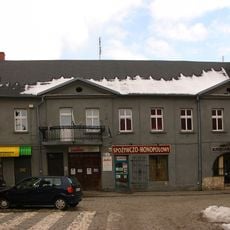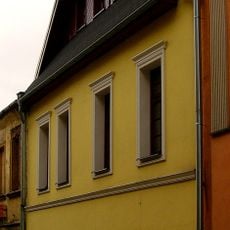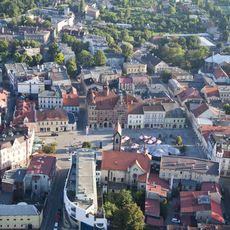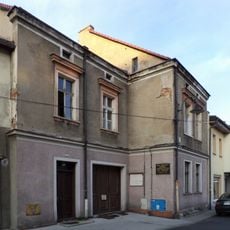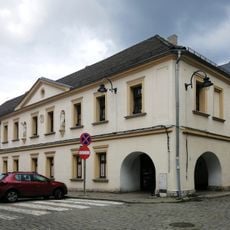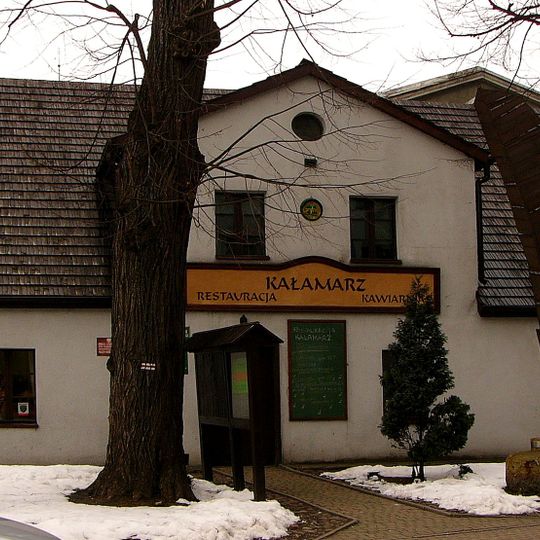
7 Górnicza Street in Tarnowskie Góry, Historical house at Górnicza Street, Tarnowskie Góry, Poland.
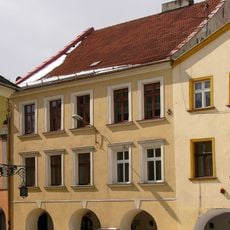
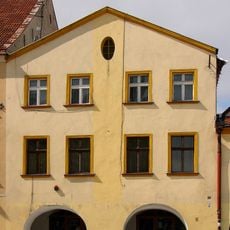
Dworek Goethego is a single-storey brick manor house from the mid-18th century at the corner of Górnicza and Jana Bondkowskiego streets. Its front elevation has six window axes and a two-axis dormer with a round window at its peak; the gable roof, once covered with shingles and later with tar paper, is crowned by œil-de-bœuf dormers. Inside, a hall on the building's axis leads to the ground-floor rooms, which retain beamed ceilings, and a two-flight staircase rises to the attic.
The manor was built in the mid-18th century by an unknown founder. It was enlarged and rebuilt in the following century and served as a burgher or noble residence. Its common name recalls Johann Wolfgang von Goethe's two-day stay in September 1790, when he visited the "Fryderyk" mine. In 1821 the Polish writer Julian Ursyn Niemcewicz stayed here and later described the visit. After World War II the building fell into ruin, was listed as a monument in 1966, and was restored between 1985 and 1990.
The building's common name recalls Johann Wolfgang von Goethe's two-day stay in September 1790, when he visited the "Fryderyk" mine. In 1821 Julian Ursyn Niemcewicz stayed here and later described the visit. The ground-floor restaurant displays Silesian and Austro-Hungarian memorabilia: old tankards, chairs, tables, photographs and paintings, and hosts art exhibitions and small concerts.
The manor stands at the corner of Górnicza and Jana Bondkowskiego streets in the historic centre of Tarnowskie Góry. The ground floor houses the "Praha" restaurant, whose garden is reached through a small wrought-iron gate in the brick wall along Bondkowskiego; a second, smaller garden lies to the south and west. Look for the inkwell-shaped monument in front of the building, a nod to the poets who stayed here.
The building's popular name recalls Johann Wolfgang von Goethe's two-day stay in September 1790, when he visited the "Fryderyk" mine, where one of the first steam engines on the European continent had been installed two years earlier. His entry in the mine's guest book stirred some controversy. In 1821 the Polish poet Julian Ursyn Niemcewicz also stayed here and later described the visit.
The community of curious travelers
AroundUs brings together thousands of curated places, local tips, and hidden gems, enriched daily by 94,449 contributors worldwide.