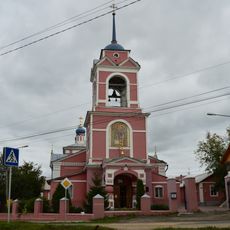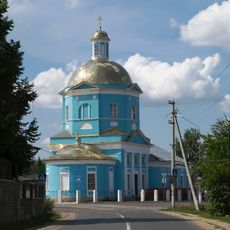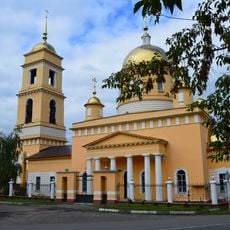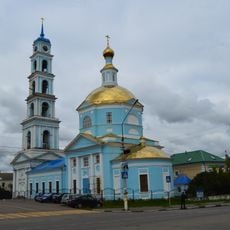
Belopesotsky monastery, Orthodox monastery in Stupino, Russia
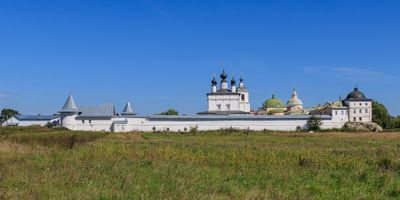
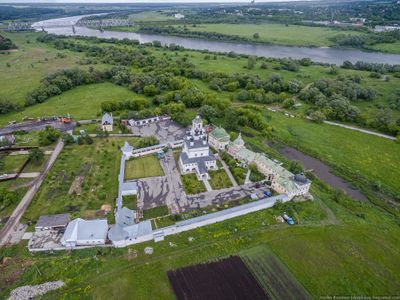
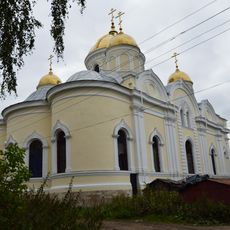
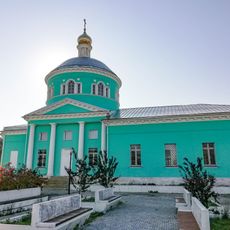
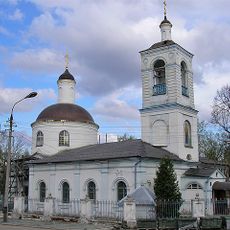
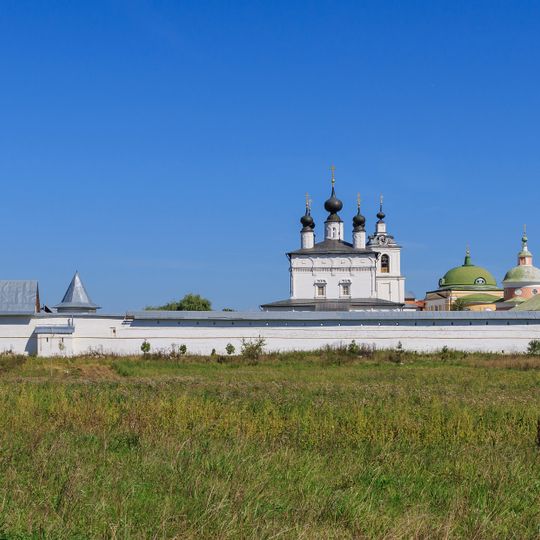
Belopesotsky monastery is an Eastern Orthodox monastery in Stupino, set on the bank of the Oka River. The complex is made up of white stone churches with domed rooftops, encircling walls and towers that form a compact ensemble along the water's edge.
The monastery was founded in 1498 as a men's monastery and for a long time served as a fortified point guarding approaches to Moscow. Over the centuries it passed through periods of closure and revival before becoming the women's community it is today.
The monastery houses a collection of icons and religious objects that visitors can see inside the churches. On the grounds there is also a sacred spring, which draws people who come to pray or simply to fetch water.
The monastery can be reached from Moscow by commuter train from Paveletsky station, getting off at Belopesetsky station and continuing on foot. Because it is an active religious community, visitors should dress modestly and cover their heads before entering the churches.
In the summer of 1941, the monastery grounds were the site of one of the first combat uses of the Katyusha rocket launcher. The weapon had only just been developed, and this location marks one of the earliest documented launches in the war.
The community of curious travelers
AroundUs brings together thousands of curated places, local tips, and hidden gems, enriched daily by 91,520 contributors worldwide.